
Typical textile and carpet-line problems behind the RFQ
- •Flexible material wraps, ropes, or drags across the cutter instead of entering a stable shear point.
- •The plant changed from clean trim to post-consumer garments, carpet, mixed rags, or backing-rich feed and the old knife strategy no longer behaves the same.
- •The buyer has worn knives and phone photos but no reliable drawing, counterknife detail, or screen information.
- •Downstream fiber opening, sorting, or granulation quality is drifting even though the purchase request only names primary shredder knives.
Buyer conclusion: quote textile recycling knives by stage, feed form, and target output
A low-risk textile or carpet recycling knife quote starts with machine stage, feed form, and target output. The European Commission textile strategy sets the wider circularity context, while machine-maker sources show that shredding, sizing, accessibility, and counterknife condition are practical operating issues. A blade quote should therefore not begin and end with old-knife dimensions.
If the plant is opening mixed garment bales, the priority may be bite and anti-wrapping behavior. If the plant is preparing carpet for downstream separation, the priority may include counterknife clearance, screen target, backing behavior, and holder access. If the plant is handling polymer-rich post-shred fractions, the quote may move toward granulator knives and bed knives. Use this guide together with our textile knife-wrapping solution, textile RFQ article, and contact page.
Machine-stage fit: bale opening, carpet shredding, fiber preparation, and granulation are different knife jobs
ANDRITZ presents textile recycling around preparation and fiber recovery, while SSI shows baled carpet as a demanding shredding material. Those references help buyers avoid treating all textile cutting as one generic spare part. The stage may be coarse opening, controlled strip sizing, screen-controlled shredding, or preparation for a downstream opener.
When the feed is mostly flexible textile, the cutting system must bite before the material folds and wraps. When the feed is carpet, the line must deal with layered construction and backing. When the feed is plastic-rich after sorting, the stage may behave more like film or soft-plastic granulation. The RFQ should name the stage so the supplier knows whether to review rotor knives, disc knives, counterknives, screens, granulator knives, or bed knives.
Where the relevant Leader Blades knife families fit
The strongest application fit is in cutting positions. Start with single-shaft shredder knives when the line uses a screened rotor, hydraulic ram, and replaceable insert or block knives. Use double-shaft shredder knives when the line relies on paired shafts, disc knives, or coarse tearing before the next process. Use general industrial shredder knives for mixed-material cutter forms and maintenance inventory.
Granulator knives and bed knives only belong in the quote when the downstream material is suitable for that stage, such as plastic-rich backing, film-like scrap, or controlled regrind after separation. Do not force every textile-recycling problem into a granulator quote. If the line uses fiber-opening equipment with no Leader Blades knife position, name that equipment and keep the quote focused on the upstream or downstream cutting parts we can actually supply.
Feed form and contamination decide the buying risk
Textile recycling RFQs fail when the feed is described too broadly. "Textile waste" can mean clean cutting-room trim, post-consumer garments, uniforms with zippers, nonwoven offcuts, carpet rolls, carpet tiles, synthetic-fiber bales, cotton-rich rags, or backing-heavy material. Each feed form changes bite, wrap, impact, screen behavior, and holder wear. A direct replacement that worked on trim may not behave the same on post-consumer garments or carpet.
List metal parts, fasteners, clips, buttons, zippers, moisture, sand, backing, rubber, adhesive, and mixed plastic film in the RFQ. Do not hide hard contamination because the first quote looks easier without it. The supplier needs the real duty to decide whether the issue is geometry, stage fit, support wear, counterknife clearance, or simply the wrong replacement expectation.
Common failure patterns in textile and carpet recycling lines
Wrapping usually points to bite, feed pressure, cutter profile, strip length, shaft interaction, or counterknife condition. Rope-like output may mean the material is being pulled instead of sheared. Screen plugging may point to output target or material behavior rather than only knife hardness. Chipped corners often suggest hidden hard parts, backing, impact, or holder movement. High current draw can be a feed-control issue, a chamber-clearance issue, or a cutter-set issue.
Republic Machine's carpet shredder sheet lists reversible cutters, replaceable tool holders, reversible counterknives, screens for sizing, and an adjustable anvil for counterknife clearance. That set of features is useful buyer evidence: carpet and textile cutting quality depends on the cutting system, not the visible cutter alone. Include counterknife, screen, and holder photos when the symptom is wrapping, dragging, or unstable output.
Practical selection for buyers, dealers, and maintenance teams
Use three levels. Level one is direct replacement because the line is healthy and the buyer needs scheduled spares. Level two is cutting-pair review because the counterknife, anvil, screen, or holder may be influencing the cut. Level three is line-fit review because the feed mix, target output, or downstream process changed the knife duty. This structure is simple enough for dealers and still detailed enough for plant maintenance teams.
For import buyers, send ordinary plant descriptions: "mixed garments with zippers," "carpet tile with backing," "nonwoven edge trim," "broadloom carpet rolls," or "fiber opener feed." Add whether the order is for a trial lot, shutdown stock, or replacement from worn samples. That commercial context changes how much review is needed before production.
What to send for a faster textile or carpet knife quote
Send geometry and operating context together. A dimension-only request may produce a budget number, but it does not protect the buyer from repeating a wrapping or counterknife-clearance problem.
- Machine brand, model, shaft count, rotor type, and exact cutting stage.
- Feed stream and form: garments, trim, nonwoven, carpet, carpet tile, fiber bales, mixed rags, backing-rich material, or plastic-rich fraction.
- Contamination: zippers, buttons, clips, metal, rubber backing, adhesive, sand, moisture, or film.
- Target output: coarse opening, strips, screen-sized shred, fiber opener feed, backing separation, granulator feed, or controlled regrind.
- Old-knife face, side, hole pattern, bevel, and installed-holder photos.
- Counterknife, anvil, screen, holder-seat, and feed-ram photos where available.
- Current symptom and whether the request is direct replacement, trial lot, emergency spares, or stage review.
When the photo set is ready, send it through the RFQ form. If the nearest product is unclear, start with recycling single-shaft shredder knives, film double-shaft shredder disc knives, multi-material shredder knives, and granulator bed knives.
Representative parts for this line
Use the closest shape below as your RFQ reference, then send dimensions or old-blade photos for fit review.
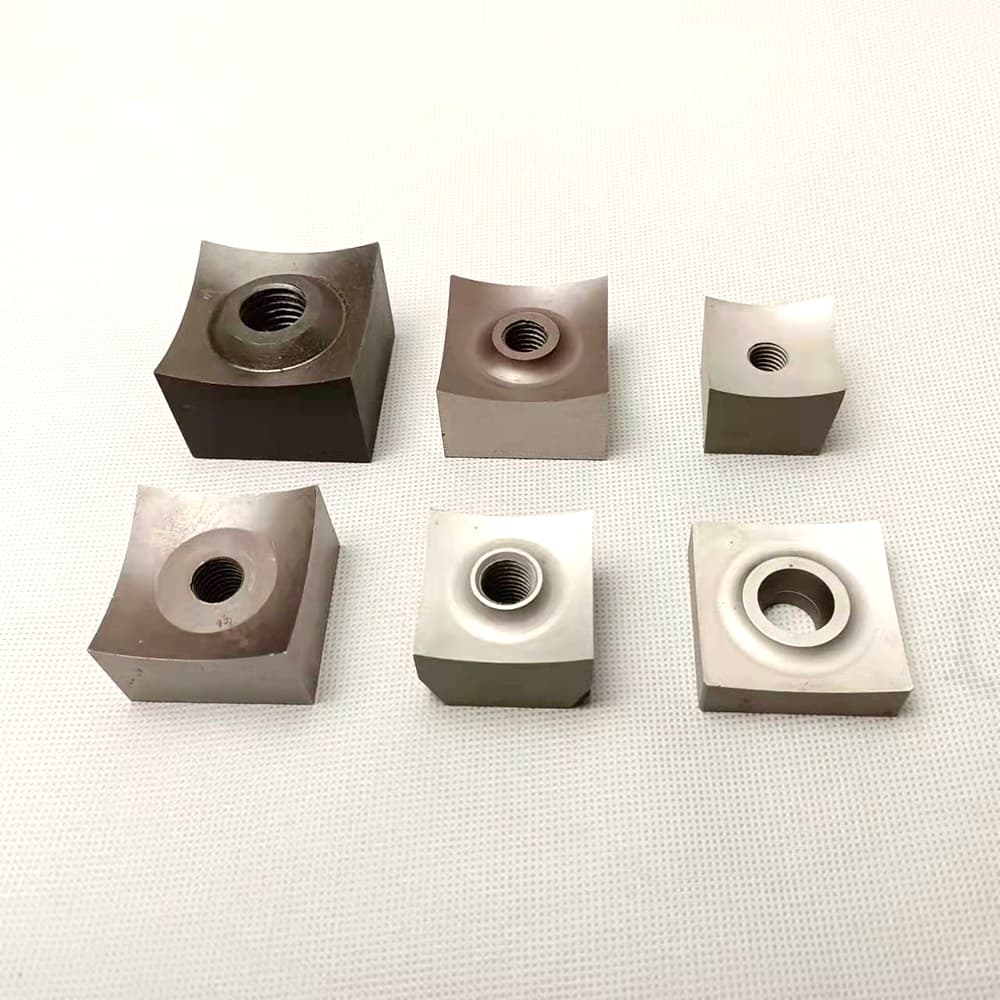
SSK-009
Recycling Single-Shaft Shredder Knife
Recycling Single-Shaft Shredder Knife is built for single-shaft shredders and film and woven bag shredding. Available in D2 / SKD11 / carbide-tipped alloy steel for wear resistance and repeated indexing in shredder rotors. The cutter geometry suits stacked shredder rotors and indexable cutter assemblies.
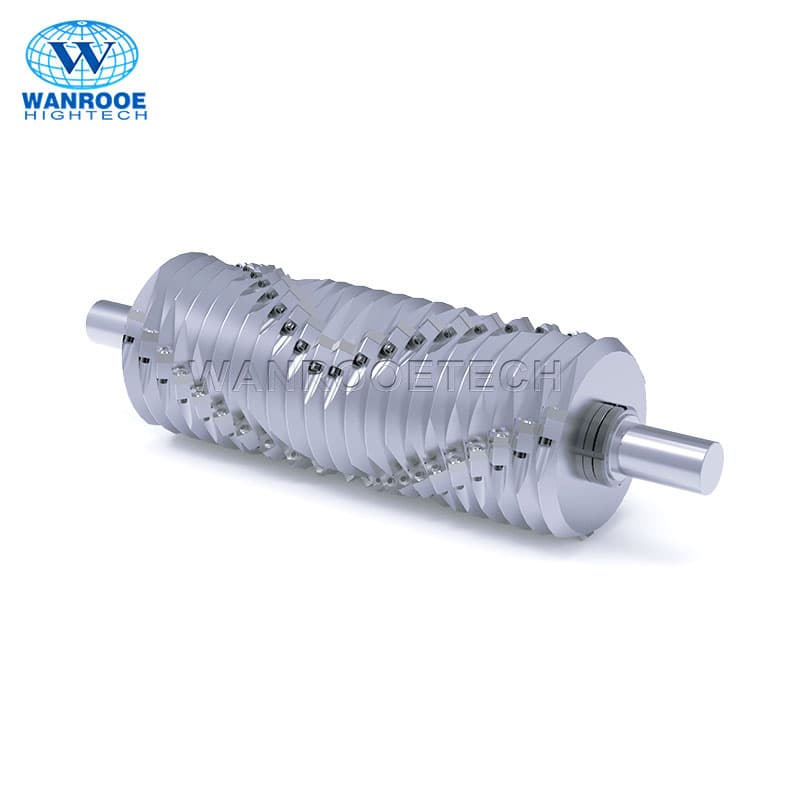
SSK-002
Plastic Single-Shaft Shredder Knife
Plastic Single-Shaft Shredder Knife is built for single-shaft shredders and film and woven bag shredding. Available in D2 / SKD11 / carbide-tipped alloy steel for wear resistance and repeated indexing in shredder rotors. The cutter geometry suits stacked shredder rotors and indexable cutter assemblies.
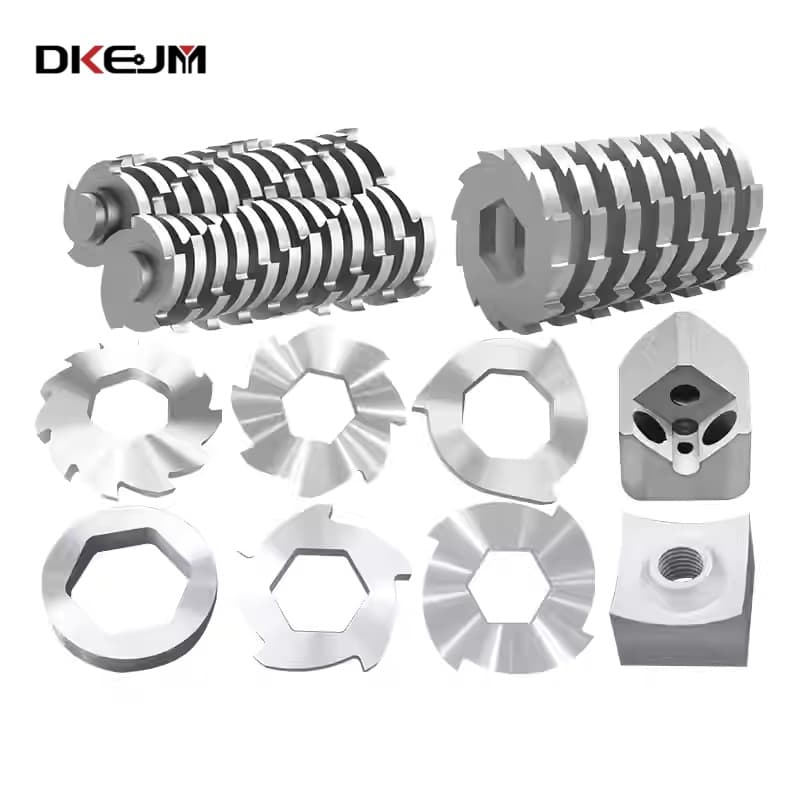
DSK-005
Film Double-Shaft Shredder Disc Knife
Film Double-Shaft Shredder Disc Knife is built for double-shaft shredders and bulky plastic waste reduction. Available in D2 / alloy steel / H13 / SKD11 for torque-heavy duty, impact resistance, and manageable maintenance cost. The cutter geometry suits stacked shredder rotors and indexable cutter assemblies.
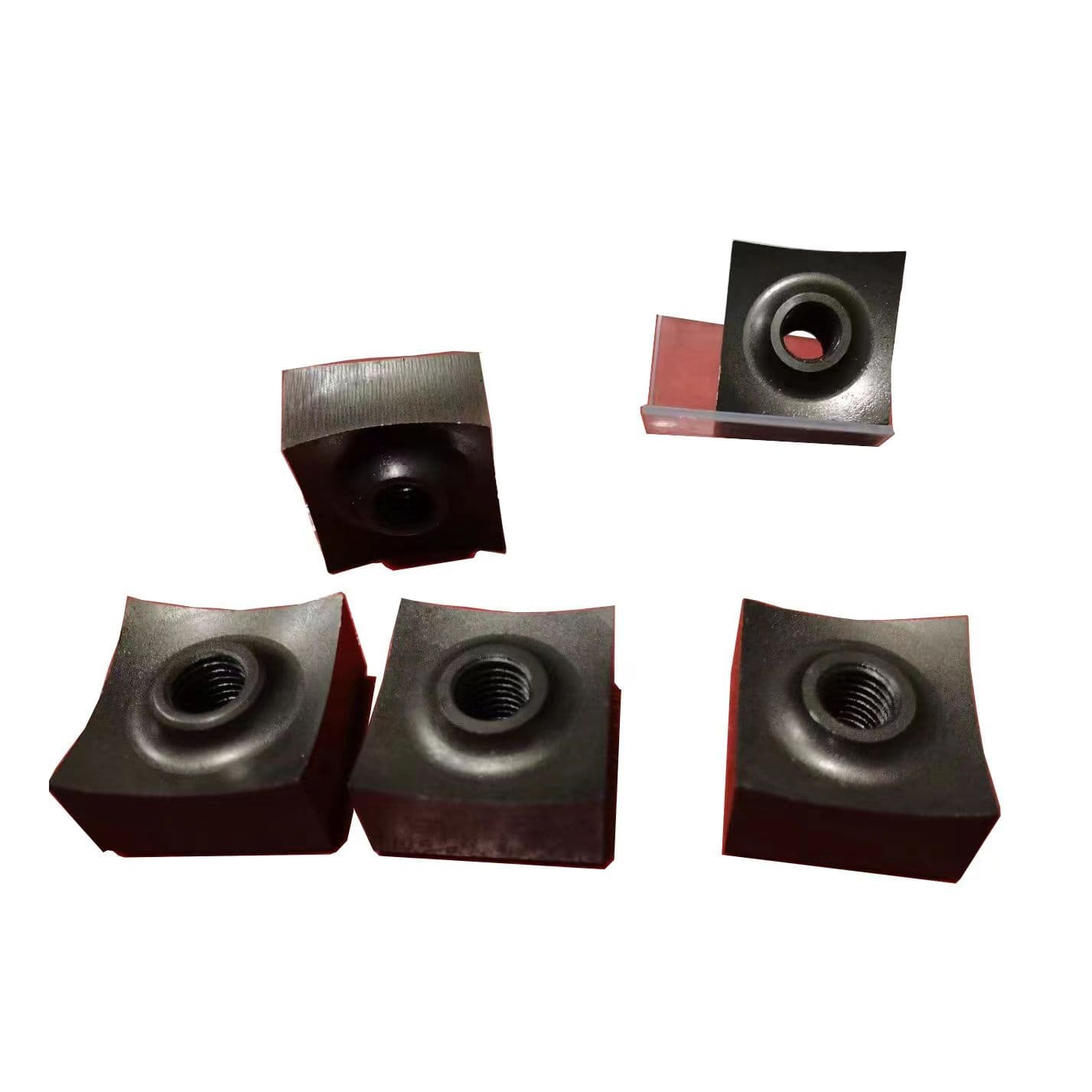
GSK-003
Multi-Material Shredder Knife
Multi-Material Shredder Knife is built for industrial recycling lines and mixed scrap size reduction. Available in SKD11 / D2 for mixed-feed shredding and steady replacement life. The profiled body suits fixed or rotary stations where alignment and edge exposure matter.
GSK-004
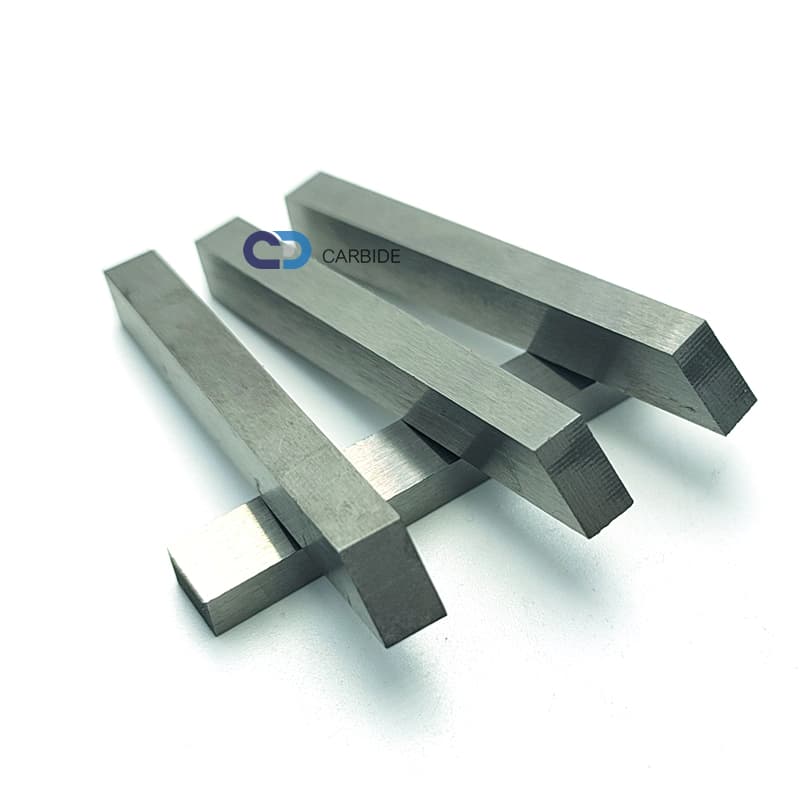
Carbide Industrial Shredder Knife
Carbide Industrial Shredder Knife is built for industrial recycling lines and mixed scrap size reduction. Available in Tungsten Carbide / Carbide for mixed-feed shredding and steady replacement life. The insert-style format fits compact cutter seats and short replacement positions.
PGK-004
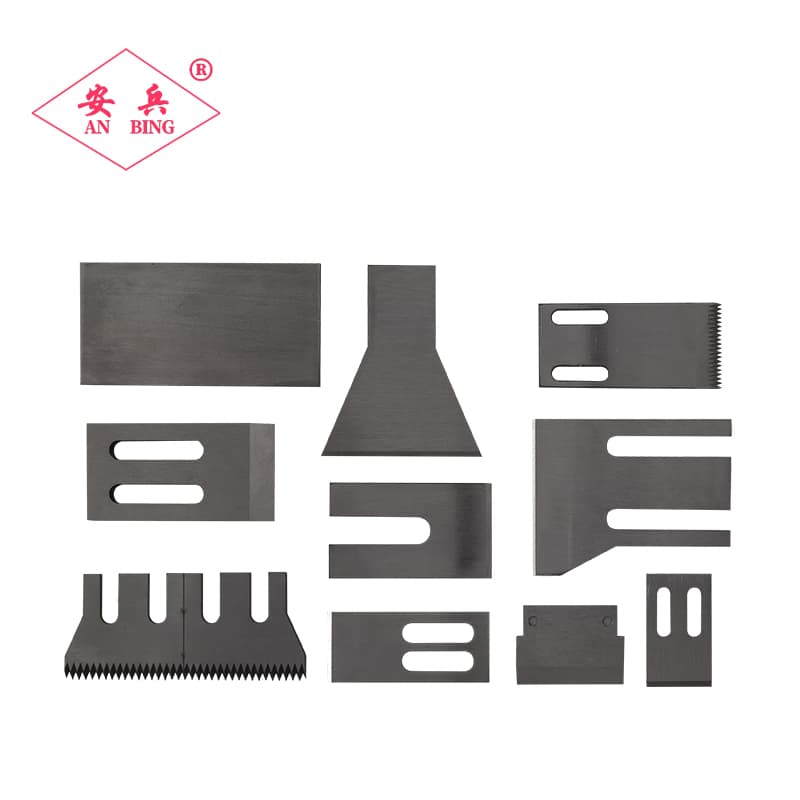
Film Granulator Insert Knife
Film Granulator Insert Knife is built for film and woven bag granulation and edge trim recovery. Available in SKD11 for clean regrind, stable clearance, and practical resharpening cycles. The insert-style format fits compact cutter seats and short replacement positions.
GBK-001
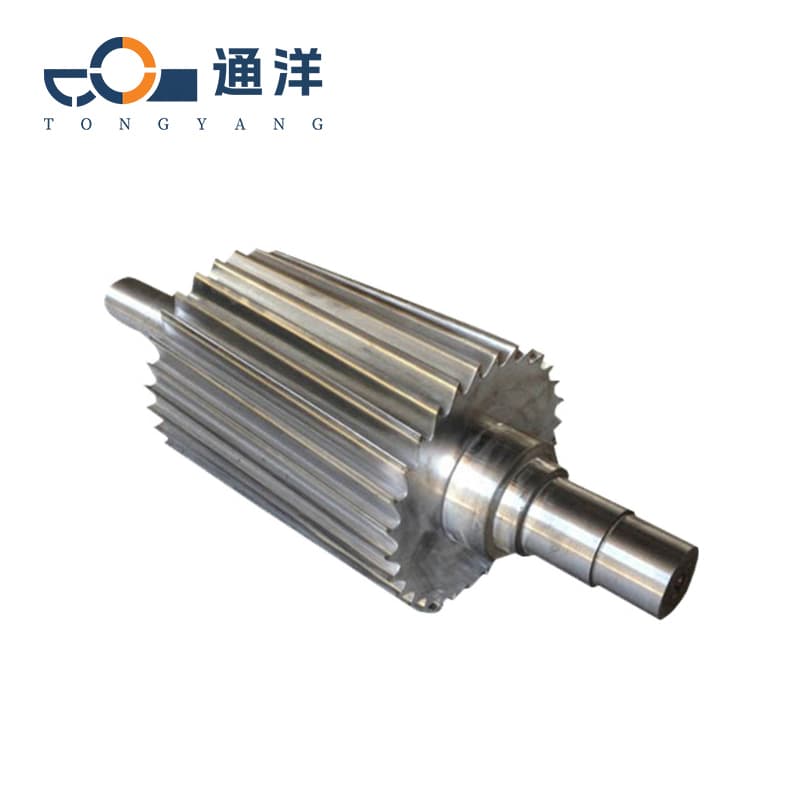
Granulator Bed Knife
Granulator Bed Knife is built for granulator bed knife replacement and pet bottle and rigid plastic grinding. Available in SKD11 / D2 / HSS / tungsten carbide for stable rotor clearance and consistent granulation quality. The insert-style format fits compact cutter seats and short replacement positions.
Related knife categories
Related articles
Textile Shredder Knife RFQ Guide: What Buyers Should Send Before Ordering Cutters
A source-backed buyer guide for textile, carpet, nonwoven, and fiber recyclers ordering shredder knives, counterknives, screens, or downstream granulator knives.
Read articleSingle-Shaft Shredder Knife Indexing: Buyer RFQ Guide
An original buyer guide built from official machine documentation: when indexing helps, when chamber wear matters more, and what to send before requesting a quote.
Read articleFAQ for textile and carpet recycling knives
Should the RFQ identify textile, carpet, or backing-rich feed separately?+
Do I need to include counterknife or anvil photos?+
Can Leader Blades quote from worn samples without a drawing?+
Which product categories are most relevant?+
Primary sources for this guide
These official and primary sources support the process-stage, shredder-application, carpet-cutting, counterknife, screen, and RFQ guidance used in this application page.
European Commission
EU strategy for sustainable and circular textiles
Provides the policy context for textile circularity, textile waste management, and fiber-to-fiber recycling priorities.
View sourceANDRITZ
Textile recycling
Frames textile recycling as preparation and fiber recovery, supporting the stage-first application logic.
View sourceUNTHA
Textile recycling discussion
Discusses shredding used clothing and textile waste before further recycling steps.
View sourceShred-Tech
ST-480 Heavy-Duty Industrial Shredder
Lists textiles and carpet as industrial shredder applications and highlights knives, shafts, overload reversal, and serviceability.
View sourceSSI Shredding Systems
Carpet Shredding: Quad
Shows baled carpet as a demanding shredding material, supporting carpet-specific RFQ questions.
View sourceRepublic Machine
Carpet shredder literature
Lists reversible cutters, counterknives, screens, replaceable tool holders, and adjustable anvil clearance.
View sourceNeed a quote for textile or carpet recycling knives?
Send the stage, feed form, contamination notes, worn-knife photos, holder photos, output target, and current symptom. We will review whether the request is a direct replacement or a stage-fit issue.