
Tire recycling lines: chip quality fell, exposed wire rose, and shredder knives wear too fast
If tire chips are drifting oversize, wire liberation is inconsistent, or replacement cutters no longer survive the same duty, the commercial fix is usually a stage-by-stage knife review, not a harder blade alone.
Typical field problems
- •The line still runs, but chip size is drifting, wire remains attached, or downstream granulation now creates more fines and heat.
- •The buyer only wants replacement tire shredder knives, yet the real failure may sit in stack tolerance, knife clearance, stage duty, or screen sizing.
- •A worn sample exists, but the team needs a low-risk export RFQ that covers stage position, target output, and maintenance strategy together.
Buyer conclusion first: when a tire recycling line starts producing larger chips, inconsistent steel liberation, more heat in granulation, or faster cutter loss, the safest purchasing decision is to quote the cutting stage by machine position instead of buying “the same knife again.” On real tire lines, a replacement part can fit the hub or pocket and still fail commercially because the stage duty has shifted from coarse pre-shredding toward tighter chip sizing, wire-cleaner output, or more demanding downstream crumb preparation. That is why we recommend starting with double-shaft shredder knives, general shredder knives, and rubber-compatible granulator knives as a stage set, not as isolated spare parts.
Machine-stage fit: official tire-processing references treat the line as a sequence. The USTMA scrap tire handbook defines shred sizing, nominal chip size, and shredded-tire processing as part of the economics and market value of the output. CM Shredders describes TDF and aggregate systems through coordinated primary shredding, screening, and chipping, while ELDAN’s rasper documentation frames tyre and steel-cord reduction as a dedicated heavy-duty stage. Buyers should therefore identify whether the job is coarse reduction, chip sizing, wire liberation, or granulation before they ask for a replacement knife quote.
RFQ criteria: send the machine brand and model, the exact machine position, current output target, screen size if relevant, feed mix, bead-wire condition, current symptom, old knife photos, and whether the order is for emergency replacement, shutdown stock, or a geometry review. If the line sells TDF, TDA, or crumb rubber, say that in the first message because market specification changes the right knife conversation. Before you send the RFQ, compare this page with our new tire recycling application guide, the new tire shredder knife RFQ article, our existing shredder downtime solution, and the contact page.
Tire recycling is commercially different from many plastic jobs because the buyer is not only asking for throughput. They are also buying toward an output market: whole-tire downsizing, tire chips for fuel or aggregate, steel liberation before further reduction, or granulated rubber for finer downstream processing. The USTMA handbook explicitly explains that shred sizing and nominal chip size define processed material classes and that scrap tire processing exists to facilitate recycling, energy recovery, or disposal. That matters in procurement because a buyer who says only “I need tire shredder knives” may still be purchasing for three very different commercial outcomes.
On the slower, earlier stages, knife stack condition and tolerance discipline matter more than many buyers expect. CM states that its tire systems were built around patented knife technology and very close knife-to-knife tolerances developed specifically in tire processing. In practical buying terms, that means a quote should ask whether the machine is struggling with bite, amps, bridging, uneven chip shape, or abnormal wear across the stack. Those symptoms often point to stack condition, alignment, spacer wear, or changing duty before they point to a metallurgy upgrade alone.
ELDAN frames the same idea from the machine-setting side. Its Super Chopper documentation describes heavy-duty pre-chopping with adjustable knife clearance to optimize cutting, while the Multi Purpose Rasper is positioned for initial and secondary reduction of materials like tyres and steel cord. That is strong buyer guidance because it shows why one plant can need rugged coarse-stage cutters while another needs cleaner follow-on reduction and more predictable wire liberation. If the RFQ does not identify the stage, the replacement risk stays unnecessarily high.
The later stages create another common buyer mistake. Plants often see hot running, more fines, or inconsistent granulate and assume the answer is simply “harder granulator knives.” But CM’s VFG granulator page links granulation performance to advanced knife design, screen selection, and access for knife adjustment, while ELDAN’s HDG240 granulator sheet positions heavy-duty granulation specifically around tough materials and controlled reduction. That means the correct RFQ should connect the shredder stage to the granulator stage instead of treating them as unrelated parts purchases.
Practical selection notes for buyers and dealers: separate the request into three levels. Level one is direct replacement because the stage is healthy and the order is simply for recurring spares. Level two is stage review because output shape, wire exposure, or motor load changed and the machine setting or cutter stack may now be part of the failure. Level three is line review because the target market changed from coarse chips to cleaner chip or crumb preparation, and the current knife package no longer matches the business model. This structure makes it easier for a buyer, trader, or maintenance team to ask the right technical questions without turning the RFQ into a long engineering report.
What to send for the fastest low-risk quote: one photo of the cutter face with a ruler, one side profile, one installed view, one photo of the adjacent stage if the line is failing downstream, and a short note describing whether the output is oversized, too stringy, too hot, too fine, or too dirty with steel. Add the machine model, shaft count, stack arrangement, screen size where applicable, and the output market you are trying to hit. If you work from old samples, also compare our OEM replacement application guide, tire recycling double-shaft shredder knife, tire shredder knife, and rubber granulator insert knife before ordering.
FAQ: Do I need to quote the granulator stage if my main problem is in tire shredding? If downstream heat, fines, or wire contamination are part of the complaint, yes. Is chip size really part of the knife RFQ? Yes. Which internal pages are most relevant next? Review the tire recycling application guide, the tire shredder RFQ article, double-shaft shredder knives, general shredder knives, and maintenance tips.
Primary sources used on this page: USTMA Scrap Tire Handbook, CM patented knife technology overview, CM TDF and aggregate systems, CM VFG granulator, ELDAN Super Chopper, ELDAN Multi Purpose Rasper, and ELDAN HDG240 granulator.
Example parts from our catalog
Close shapes for quoting—send ruler photos or drawings so the factory confirms fit before you lock in quantity.
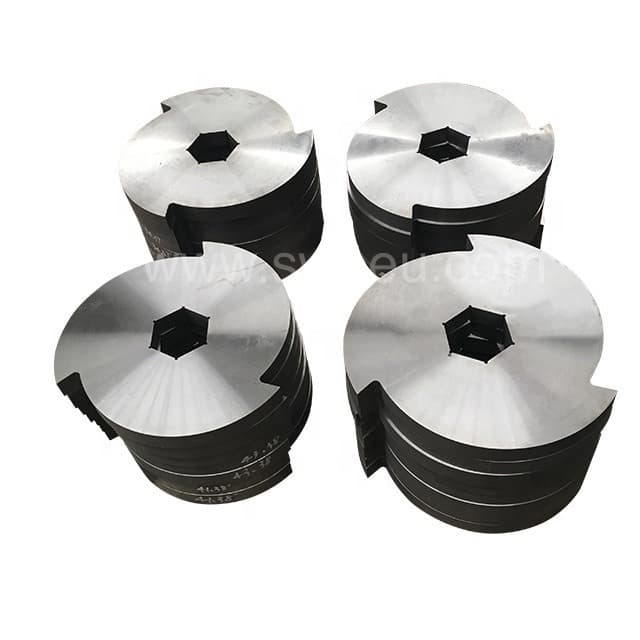
DSK-001
Tire Recycling Double-Shaft Shredder Knife
Tire Recycling Double-Shaft Shredder Knife is built for tire and rubber pre-shredding and bulky waste volume reduction. Available in SKD11 / D2 / Cr12MoV for torque-heavy duty, impact resistance, and manageable maintenance cost. The cutter geometry suits stacked shredder rotors and indexable cutter assemblies.
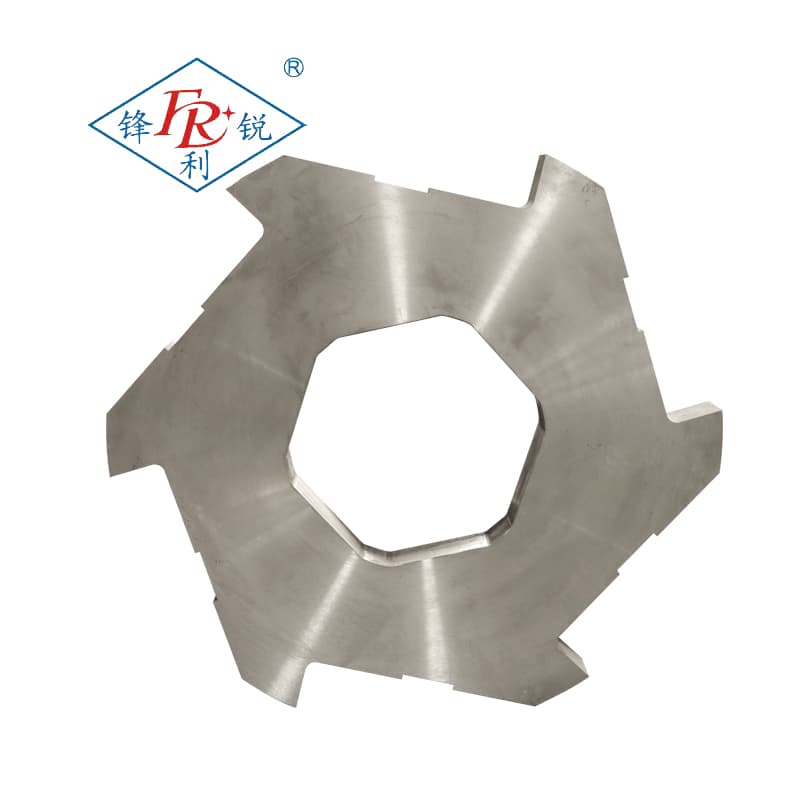
DSK-009
Rubber Double-Shaft Shredder Cutter
Rubber Double-Shaft Shredder Cutter is built for tire and rubber pre-shredding and bulky waste volume reduction. Available in D2 / alloy steel / H13 / SKD11 for torque-heavy duty, impact resistance, and manageable maintenance cost. The cutter geometry suits stacked shredder rotors and indexable cutter assemblies.
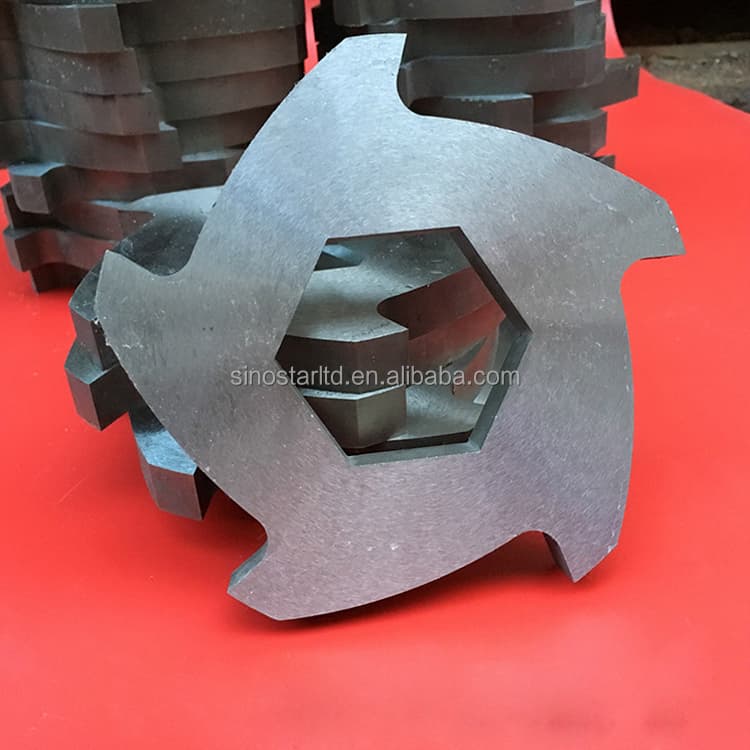
GSK-002
Tire Shredder Knife
Tire Shredder Knife is built for tire and rubber shredding and mixed scrap size reduction. Available in SKD11 / Cr12MoV / 9CrSi for mixed-feed shredding and steady replacement life. The profiled body suits fixed or rotary stations where alignment and edge exposure matter.
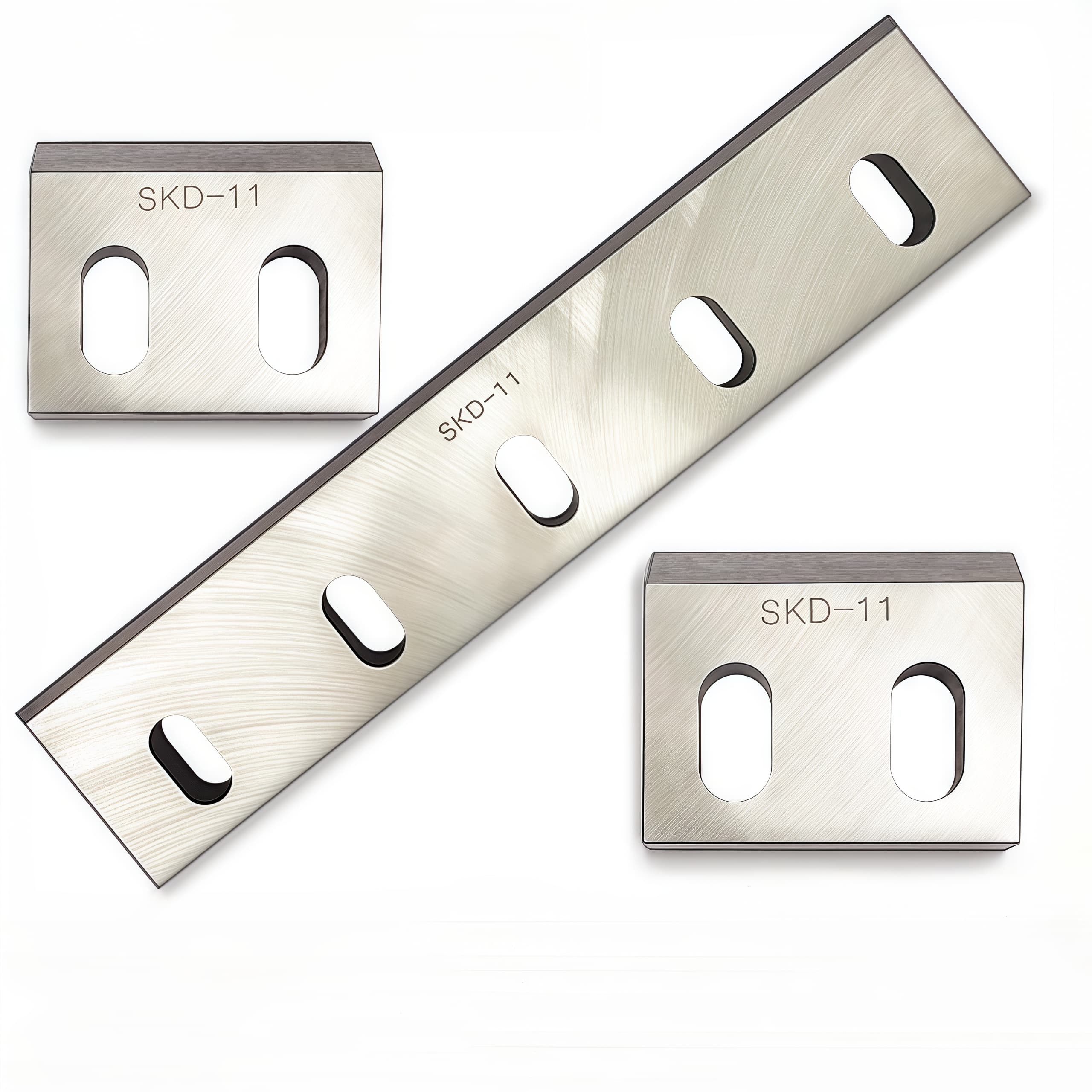
PGK-006
Rubber Granulator Insert Knife
Rubber Granulator Insert Knife is built for rubber scrap granulation and elastomer trim recovery. Available in SKD11 / D2 / HSS / 9CrSi for clean regrind, stable clearance, and practical resharpening cycles. The insert-style format fits compact cutter seats and short replacement positions.
Related catalog categories
Deep reading
Tire Shredder Knife RFQ Guide: What Buyers Should Send Before Ordering Replacement Cutters
A source-backed buyer guide for tire shredder knives, rasper-stage cutters, and downstream granulator knives: machine-stage fit, output targets, and the RFQ details that prevent repeat failures.
Read articleBlade Maintenance Tips for Longer Life
Inspection intervals, alignment checks, and cleaning—for granulators, crushers, and shredders.
Read article
Need this applied to your line?
Mention this solution hub in your message so sales engineering opens the thread with the right checklist.