
Bulky rigid plastics: drums, IBCs, and pallets need the pre-shredder knife stack matched to the downstream line
When bulky rigid-plastic lines start bridging, overloading, or sending unstable feed into the crusher or granulator, the safest RFQ is a twin-shaft knife-stack review tied to the next machine stage, not a same-shape reorder.
Typical field problems
- •The plant asks for another disc knife or hook set, but the real problem may be the way bulky containers are entering the pre-shredder and the way the next stage is receiving them.
- •The old knife geometry still fits the shaft, yet throughput dropped, reversals increased, or the downstream crusher is now seeing more overloads and inconsistent feed.
- •The buyer has worn cutters and a machine photo, but no one has written down whether the job is coarse pre-shredding only, volume reduction before washing, or controlled feed preparation for a granulator.
Buyer conclusion first: if a recycling line for drums, IBC containers, pallets, crates, or mixed rigid-plastic parts is choking at the first size-reduction stage, the safest commercial decision is usually to review the double-shaft knife stack together with the actual pre-shredding duty and the downstream machine, not to buy another set only because the outer dimensions look familiar. Official machine makers repeatedly separate coarse pre-shredding from granulation and show that bulky items behave differently from sprues, edge trim, or already-sized regrind.
Machine-stage fit: WEIMA's M8.28 page describes twin-shaft technology as a pre-shredder for wide material streams and says the cutting shafts can be configured with eight to twelve cutting disks depending on the required throughput and particle size. Genox's M Series page lists plastic drums or containers and wood pallets among the typical applications for a low-speed, high-torque twin-shaft shredder. Those are procurement signals. They tell the buyer that the cutting package belongs to a specific stage objective: coarse opening, volume reduction, or controlled handoff to the next machine.
RFQ criteria and commercial decision logic: send the machine brand and model, the shaft style if known, photos of the installed knife stack, spacer arrangement, worn faces, and the actual feed mix. Add whether the line is only trying to break bulky items open or whether it must prepare a consistent fraction for a downstream crusher, granulator, or washing line. If the next-stage complaint is already dusty or erratic output, compare this page with our rigid-plastic application guide, our granulator knife-gap article, and the contact page before ordering.
Bulky rigid-plastic lines create RFQ mistakes because the first visible symptom is often not the first technical cause. Purchasing sees a worn disc knife. Production reports that whole drums bounce, pallets bridge, or IBC bodies do not feed evenly. Maintenance says the shaft reverses more often, amps rise, or the downstream machine no longer sees a stable fraction. All three observations can be true at once, and all three belong in the quotation request.
Conair's granulator-versus-shredder guide makes the stage split explicit: granulators cut by taking repeated small bites, while dual-shaft shredders are described as more efficient on bulky scrap. That matters commercially because many buyers react to a bulky-feed problem as if it were a granulator-knife problem. If the first machine is the wrong stage for a simple knife-only fix, the next reorder may still fit the shaft and still fail to stabilize the line.
WEIMA's machine-types overview says twin-shaft shredders are particularly suitable for coarse pre-shredding where a uniform material size is not required. That is a useful warning for buyers. If your downstream process suddenly needs tighter and more repeatable sizing than before, the quotation should say so. Otherwise the supplier may quote a correct coarse pre-shredder knife arrangement for a job that has already become a feed-preparation problem.
Genox adds another practical signal: the M Series is built around low-speed, high-torque operation for bulky or voluminous materials that may contain contamination such as metals or stones. In commercial terms, this means the RFQ should state whether the line is seeing labels, metal closures, trapped dirt, or mixed packaging hardware. A replacement set that ignores contamination history can repeat the same wear pattern very quickly.
UNTHA's plastics application page describes recycling as shredding, washing, and subsequent generation of granulate, and it says different cutting systems, rotor shapes, and blade sizes are adapted to material requirements. Its pallets page separately highlights resistance to extraneous materials on pallet duties. Put together, those official sources support the practical buyer rule: do not quote bulky rigid-plastic knives as a generic spare part without naming the material family and the next process stage.
When the supplier should quote the knife stack together with the next stage
Quote the twin-shaft cutters together with downstream size-reduction logic when the pre-shredder now sends oversized chunks into the crusher, when washing throughput drifts because container bodies are opening unevenly, when the line recently moved from crates to drums or IBCs, or when contamination changed. These are not small maintenance notes. They are the commercial difference between a direct replacement and a stage-fit review.
When direct replacement is usually enough
Direct replacement is relatively low risk when the line is still feeding correctly, the downstream stage is stable, the knife wear is uniform across the stack, and the plant only needs normal preventive spares. In that situation, start from the plastic double-shaft shredder knife, double-shaft shredder disc knife, and heavy-duty double-shaft shredder knife product families. If the line handles mixed scrap beyond standard rigid plastic, compare the broader general shredder knife category as well.
When the RFQ is higher risk than it looks
The risk rises when the buyer only has one worn sample from a line that was already underperforming, when one shaft is wearing faster than the other, when one spacer group has polished differently, or when the request says only "same size again" after the feed mix changed. Those details decide whether the next order should be a same-geometry replacement, a geometry review from the installed stack, or a trial batch before a full shutdown purchase.
What to send for a lower-risk RFQ
Send one front photo of the removed cutter with a ruler, one side photo showing thickness and wear face, one installed photo of the shaft stack, and one wider chamber photo showing spacer order and material behavior. Add the machine model, the main feed mix, whether you process drums, IBCs, pallets, crates, or mixed rigid scrap, whether contamination is common, and what the downstream stage is. State the current symptom plainly: bridging, reversals, slower bite, oversized output, or unstable feed to the crusher.
Common buyer-side mistake
The most common mistake in this cluster is treating bulky-rigid-plastic pre-shredding as if it were only a steel-grade question. Official OEM pages describe twin-shaft machines in terms of throughput objective, contamination tolerance, maintenance access, and downstream processing fit. Buyers who skip those points often receive a mechanically compatible knife set and still fail to restore the line objective that matters commercially.
Internal routes to review before ordering
Start with the double-shaft shredder knife category, then compare the plastic double-shaft shredder knife, disc knife, heavy-duty knife, and multi-material shredder knife. For downstream logic, compare our rigid-plastic recycling application guide, HDPE pipe and purge-lump solution, single-shaft shredder RFQ article, and the contact page.
Primary sources used on this page: WEIMA M8.28 twin-shaft pre-shredder, WEIMA machine-types overview, Genox M Series Twin Shaft Shredder, UNTHA plastics application, UNTHA pallets application, and Conair granulator versus shredder guide.
Example parts from our catalog
Close shapes for quoting—send ruler photos or drawings so the factory confirms fit before you lock in quantity.
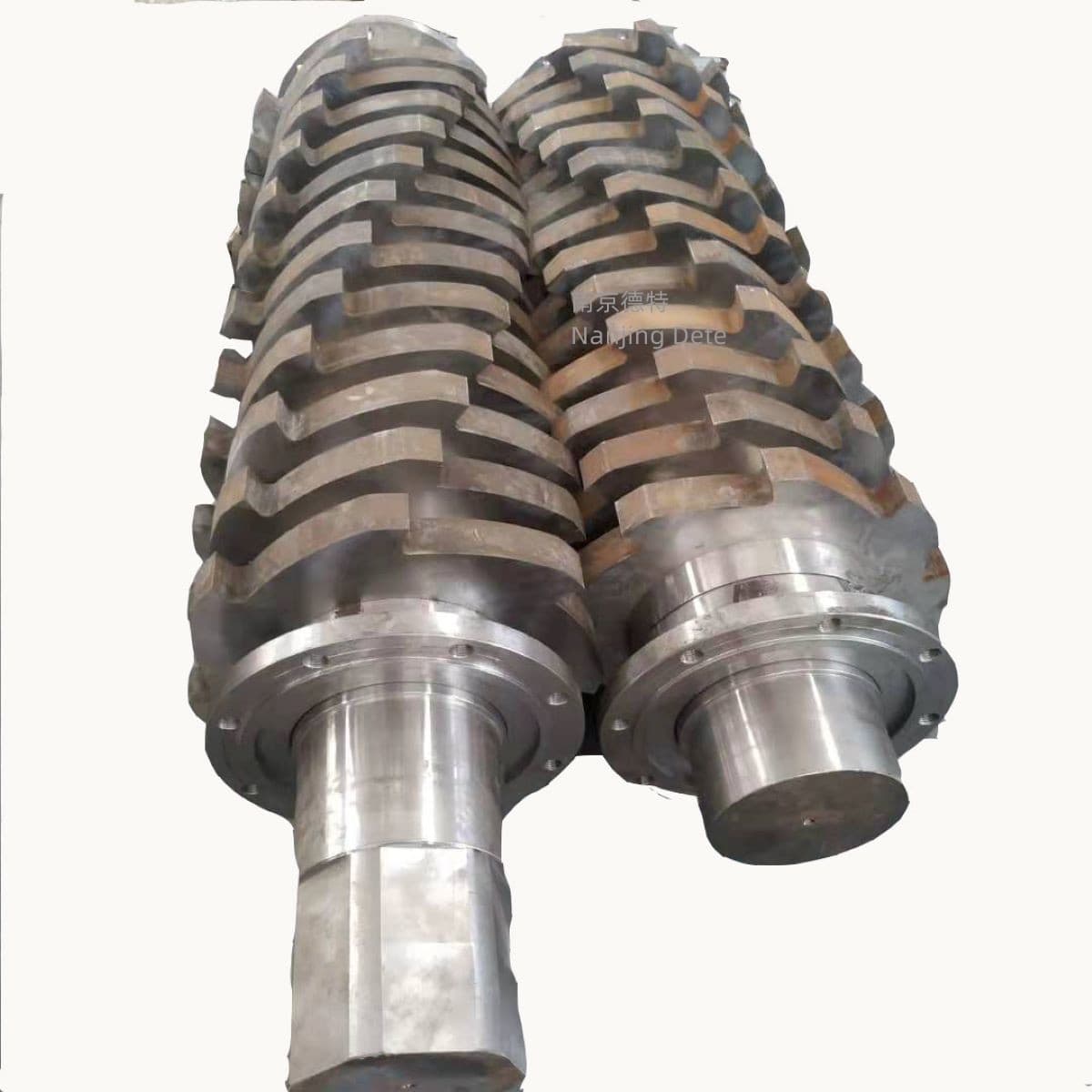
DSK-008
Plastic Double-Shaft Shredder Knife
Plastic Double-Shaft Shredder Knife is built for double-shaft shredders and bulky plastic waste reduction. Available in D2 / alloy steel / H13 / SKD11 for torque-heavy duty, impact resistance, and manageable maintenance cost. The cutter geometry suits stacked shredder rotors and indexable cutter assemblies.
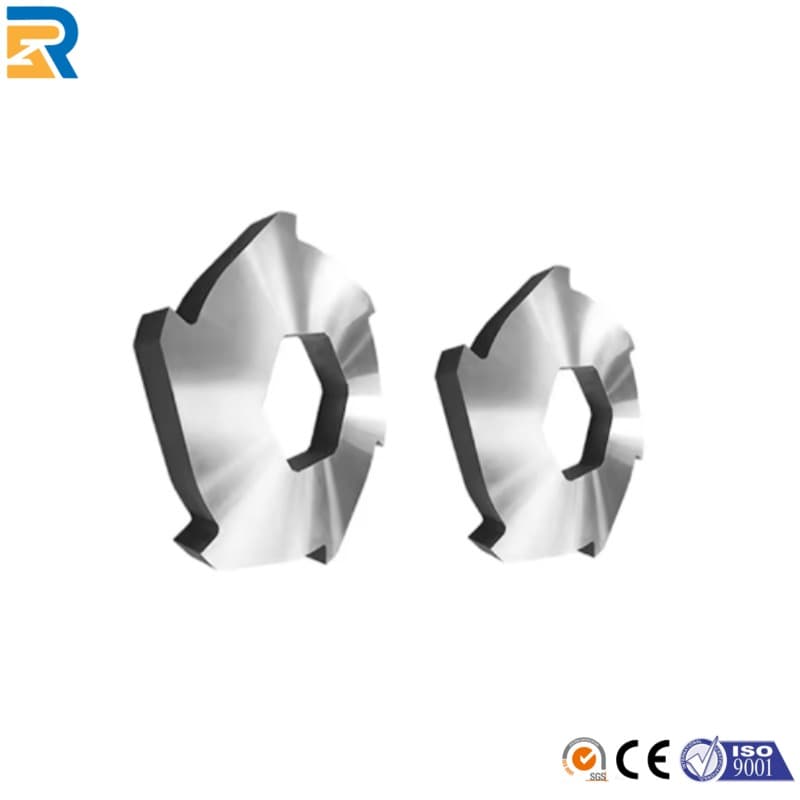
DSK-004
Double-Shaft Shredder Disc Knife
Double-Shaft Shredder Disc Knife is built for double-shaft shredders and bulky plastic waste reduction. Available in HSS for torque-heavy duty, impact resistance, and manageable maintenance cost. The cutter geometry suits stacked shredder rotors and indexable cutter assemblies.
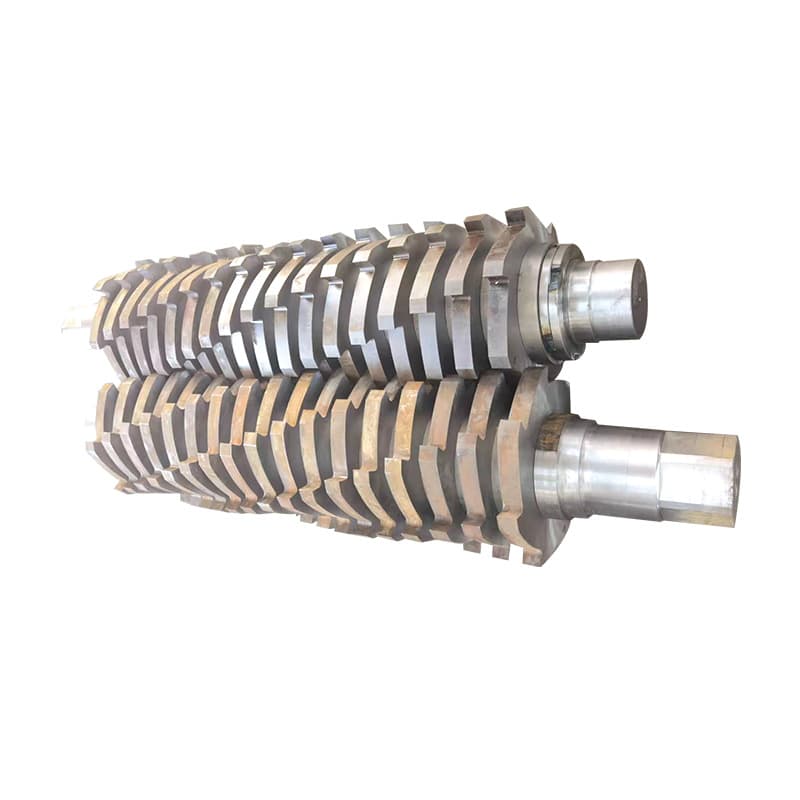
DSK-002
Heavy-Duty Double-Shaft Shredder Knife
Heavy-Duty Double-Shaft Shredder Knife is built for double-shaft shredders and bulky plastic waste reduction. Available in D2 / HSS / 9CrSi / H13 for torque-heavy duty, impact resistance, and manageable maintenance cost. The cutter geometry suits stacked shredder rotors and indexable cutter assemblies.
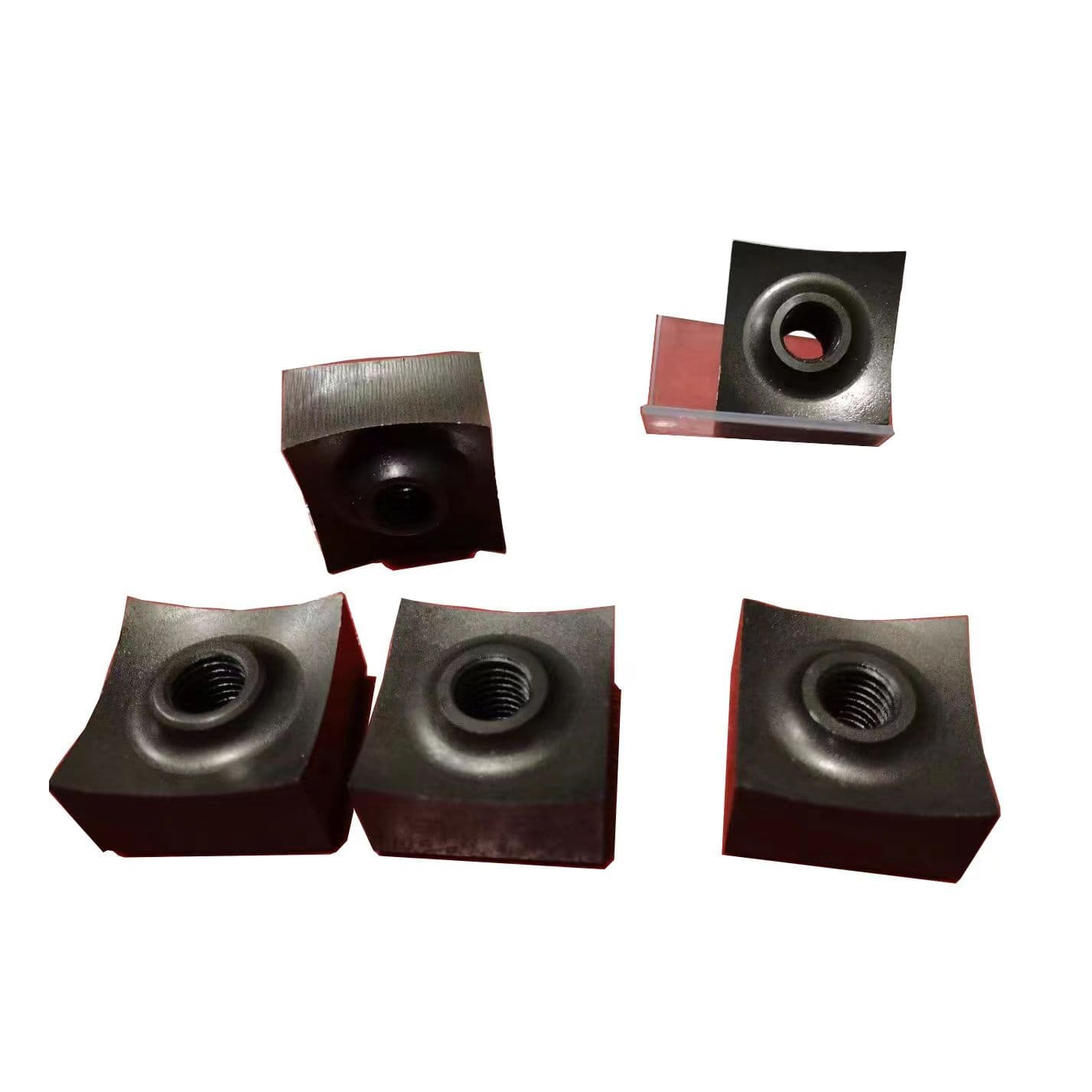
GSK-003
Multi-Material Shredder Knife
Multi-Material Shredder Knife is built for industrial recycling lines and mixed scrap size reduction. Available in SKD11 / D2 for mixed-feed shredding and steady replacement life. The profiled body suits fixed or rotary stations where alignment and edge exposure matter.
Related catalog categories
Deep reading
Single-Shaft Shredder Knife Indexing: Buyer RFQ Guide
An original buyer guide built from official machine documentation: when indexing helps, when chamber wear matters more, and what to send before requesting a quote.
Read articleGranulator Knife Gap Checklist: Reduce Dust, Fines, and Noise
A practical rotor-to-bed-knife inspection flow for recyclers seeing dusty regrind, noisy cutting, or repeated knife damage after a blade change.
Read articleBlade Maintenance Tips for Longer Life
Inspection intervals, alignment checks, and cleaning—for granulators, crushers, and shredders.
Read article
Need this applied to your line?
Mention this solution hub in your message so sales engineering opens the thread with the right checklist.