
PVC window-profile recycling: dustier regrind, hotter cuts, and unstable knife life
When post-use PVC window and profile lines start making dusty regrind or short knife runs, the lower-risk RFQ is a stage-fit review across shredding, crushing, and granulation, not a same-size reorder.
Typical field problems
- •The line used to process PVC window profiles acceptably, but now regrind is dustier, the chamber runs hotter, or the same knife geometry no longer lasts through the planned maintenance interval.
- •The buyer has old knives and machine photos, yet no one has written down whether the current problem starts in pre-shredding, in the crusher, in the granulator, or in the way metal-reinforced profile scrap is entering the line.
- •The RFQ is still being treated as a direct replacement order even though the commercial complaint is really output quality, unstable handoff to the next stage, or repeated rework after knife changes.
Buyer conclusion first: if a PVC window-profile recycling line is suddenly making dustier regrind, running hotter, or losing knife life faster than before, the lower-risk commercial decision is usually to review the pre-shredder knife stage, the crusher knife stage, and the granulator cutting pair together. Ordering a same-size knife set without identifying the failing machine stage often reproduces the same complaint after startup.
Machine-stage fit: official PVC recycling sources make it clear that old window profiles are a real circular-material stream, but they also show why the cutting task is not generic. REHAU says window profiles can be mechanically recycled when the waste stream is homogeneous, separated, and sorted. ZERMA specifically says PVC-industry hammer-mill solutions have been used to separate used window profiles from metallic reinforcement and fittings. Those two signals matter for procurement: the line is recycling a valuable rigid profile material, but the machine stage still has to match reinforcement, contamination, and the required output size.
RFQ and commercial decision logic: send the machine brand and model, the exact stage under review, profile condition, whether metal reinforcement or fittings are still present, photos of the installed knives and fixed side, the current regrind symptom, and the next-stage complaint. If the line already has unstable granulation or dust problems, compare this page with our PVC window-profile application guide, the granulator knife-gap article, and the contact page before asking for a repeat build.
Why this keyword cluster matters commercially
PVC window-profile recycling is not a thin long-tail topic for this site. It matches the actual knife families that Leader Blades already sells, and it matches a buyer problem that machine makers and profile recyclers describe in public. VEKA states that old PVC windows and doors are recycled into high-purity regranulate and notes both the scale of recycled window feedstock and the continued use of recycled core material in new profiles. EPPA describes PVC window recycling as part of the circular economy and explicitly ties dismantled windows to collection, sorting, and reprocessing infrastructure across Europe.
That matters because buyers in this cluster are rarely asking for a knife in the abstract. They are asking how to keep a rigid, often contaminated, metal-associated profile stream moving through real recycling machinery with acceptable regrind quality and maintenance cost. In practice, those buyers search with phrases around PVC profile recycling knives, crusher blades, granulator knives, dusty regrind, hot cutting, and aftermarket replacement. That is a strong site fit: the search intent is commercial, the products exist on the site, and the downstream RFQ path is real.
VEKA also says an average PVC window has a lifespan of 30 to 40 years and can be recycled up to 10 times. That does not justify any knife-life promise, but it does justify a serious buyer page about replacement knives for end-of-life profile streams. If the profile material has long-term circular value, then the cutting stage that preserves usable regrind has direct procurement value as well.
Machine-stage fit across PVC profile recycling
The first buying question is whether the RFQ belongs to pre-shredding, crushing, granulation, or a finer rigid-PVC reduction stage. WEIMA presents rigid-plastic shredding around bulky and difficult streams such as HDPE pipe and similar heavy-duty duties. ZERMA adds that, in PVC recycling, specialized size-reduction equipment has been used to separate used window profiles from metallic reinforcement and fittings. For a buyer, that means the line stage must be named clearly. A pre-shredder bite problem is not quoted the same way as a crusher chamber problem or a granulator fixed-knife problem.
This stage logic is why one installed part number may stop being commercially correct even when the part still fits. A plant may have switched from cleaner production offcuts to more post-use profiles. The share of metal hardware, seals, or mixed fittings may have changed. The downstream line may now need a more stable fraction before washing, separation, or final granulation. In those cases, a direct repeat order can be mechanically correct and commercially wrong at the same time.
For buyers who only know the visible wear part, the safest path is to map the stage first. If the line opens whole frames or bulky profile scrap, start from the hard-plastic single-shaft shredder knife side. If the line is already reducing rigid profile sections through a crusher, compare the plastic crusher profile blade and fixed crusher knife. If the complaint is dust, heat, or inconsistent granule size after crushing, move to the granulator insert knife and granulator bed knife pair.
What dustier regrind and hotter cutting usually mean
Dustier regrind, hotter cutting, and shorter knife life look like simple wear complaints, but commercially they often mean the line has lost stage fit. If the pre-shredder is delivering a less stable fraction, the crusher or granulator is forced to work harder. If the fixed side is worn or the chamber is not being reset consistently after sharpening, the buyer experiences dust, noise, heat, or unstable output and then assumes the steel grade is the whole story. It usually is not.
REHAU says mechanical recycling works where the PVC waste stream is homogeneous, separated, and sorted. That principle can be translated directly into knife-buying language. When the incoming stream is less separated, carries more fittings, or arrives in more variable profile geometry, the cutting stage sees a different commercial job even if the machine model is unchanged. The RFQ should say what changed in the feed, not only what the last knife looked like.
That is also why buyers should mention the next-stage complaint. If the line is now producing more fines, feeding the granulator badly, or creating more cleanup around dust and heat, say that in the first email. The next-stage symptom helps determine whether the supplier should quote direct replacement, a fixed-side review, or a broader stage-fit correction across the line.
RFQ checklist for PVC window-profile knife work
The fastest low-risk RFQs in this cluster combine part geometry with processing context. Send these items in the first message where possible:
- Machine brand, model, and serial-number range if available.
- Exact stage under review: pre-shredder, crusher, granulator, or another rigid-PVC reduction step.
- Whether the feed is post-use window profiles, cleaner production profile offcuts, mixed profile scrap, or profile material still carrying fittings or reinforcement.
- One front photo, one side-profile photo, and one installed photo of the knife or knife seat.
- Photos of the fixed side, bed knife, or counter side where that affects the cut.
- The actual output complaint: dustier regrind, more heat, more fines, more noise, unstable handoff, or shorter maintenance interval.
- The next-stage complaint, if one exists: harder washing, unstable granulation, or regrind that no longer meets the plant’s internal standard.
- Whether you want direct replacement, aftermarket geometry review from worn samples, or a wider chamber review.
Buyers who only send length, width, thickness, and hole spacing usually receive a preliminary quote, but not always the safest production quote. PVC profile recycling lines are exactly where the installed photos and stage description make the difference.
Practical selection notes for plants, dealers, and aftermarket buyers
For end users, the cleanest commercial split is between three purchase situations. The first is direct replacement because the line is healthy and the RFQ is only for shutdown spares. The second is knife-plus-fixed-side review because dust, heat, or output drift now suggests that the cutting pair should be treated as one system. The third is broader stage review because the complaint includes feed change, reinforcement change, or downstream instability that makes a same-shape reorder too risky.
For dealers and service teams, the most useful first step is to anchor the RFQ to the nearest site-fit category and product page before sending photos. Start from the plastic crusher blade category, the plastic granulator knife category, and the granulator bed-knife category. Then compare representative parts such as the plastic crusher profile blade, fixed plastic crusher knife, granulator insert knife, and granulator bed knife.
If the chamber problem resembles a wider rigid-plastic line issue, also compare our plastic size-reduction solution, the PVC window-profile application guide, the granulator knife-gap checklist, and the contact page. Those internal routes turn a weak knife-only inquiry into a credible aftermarket RFQ.
Common buyer mistake
The most common mistake in this cluster is to treat PVC window-profile recycling as ordinary rigid-plastic grinding without naming reinforcement, profile condition, and the exact reduction stage. Official sources show that PVC window material is valuable and recyclable, but they also show that the stream is often tied to sorting, fittings, and stage-specific machinery. When the RFQ ignores those factors, a supplier may ship a dimensionally correct knife set that still fails to restore the line objective that matters commercially.
The safer buyer habit is simple: identify the stage, name the profile condition, mention reinforcement or fittings, describe the output complaint, and include installed photos of both moving and fixed sides. That is the difference between a price inquiry and a usable RFQ.
FAQ for PVC window-profile recycling knives
Should I mention metal reinforcement or fittings if I only want replacement knives?
Yes. Official PVC profile recycling sources explicitly link old window streams to separation of reinforcement and fittings. That feed detail changes the safest quotation path.
What if the machine model is known but the chamber drawing is missing?
That is common in aftermarket work. Send worn samples, installed photos, the stage under review, and the output complaint. That is usually enough to begin technical review.
Do dustier regrind and higher heat always mean I need harder steel?
Not necessarily. Those symptoms often indicate a stage-fit or fixed-side problem as much as a material-grade problem, especially when the feed stream changed.
Which internal pages should buyers compare next?
Compare the PVC window-profile application guide, the plastic size-reduction solution, the granulator knife-gap article, the crusher and granulator categories, and the contact page.
Can you quote from old knives and phone photos only?
Yes, in many cases. Clear photos with scale, the machine stage, and the real line symptom are usually more useful than dimensions alone.
Primary sources used on this page
This page is an original buyer-side synthesis built only from primary and official sources. Key references: REHAU Sustainability & Recycling, VEKA Recycling & Compound, EPPA Sustainability of uPVC Windows, WEIMA rigid-plastics shredding, and ZERMA specialized machinery for PVC applications.
Example parts from our catalog
Close shapes for quoting—send ruler photos or drawings so the factory confirms fit before you lock in quantity.
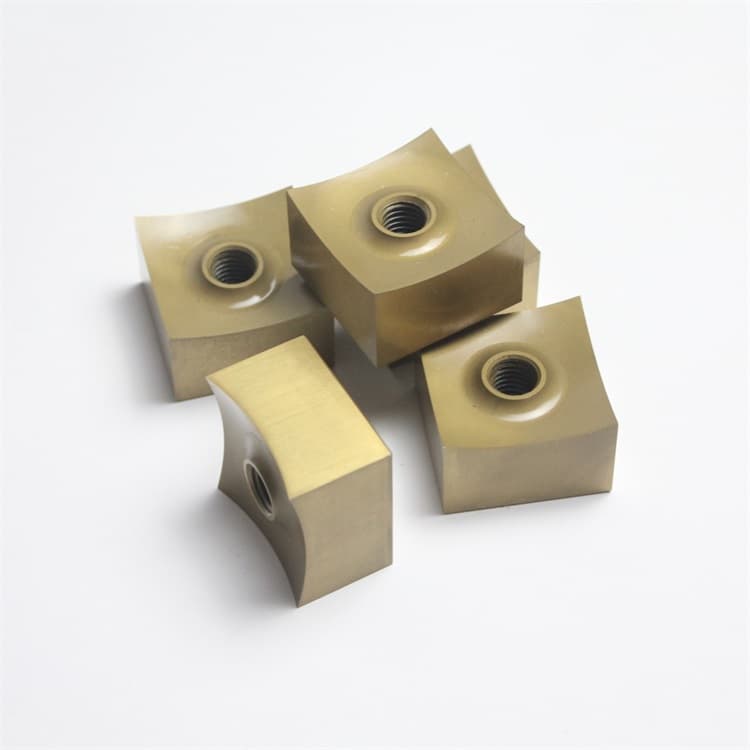
SSK-006
Hard Plastic Single-Shaft Shredder Knife
Hard Plastic Single-Shaft Shredder Knife is built for single-shaft shredders and film and woven bag shredding. Available in D2 / SKD11 / carbide-tipped alloy steel for wear resistance and repeated indexing in shredder rotors. The cutter geometry suits stacked shredder rotors and indexable cutter assemblies.
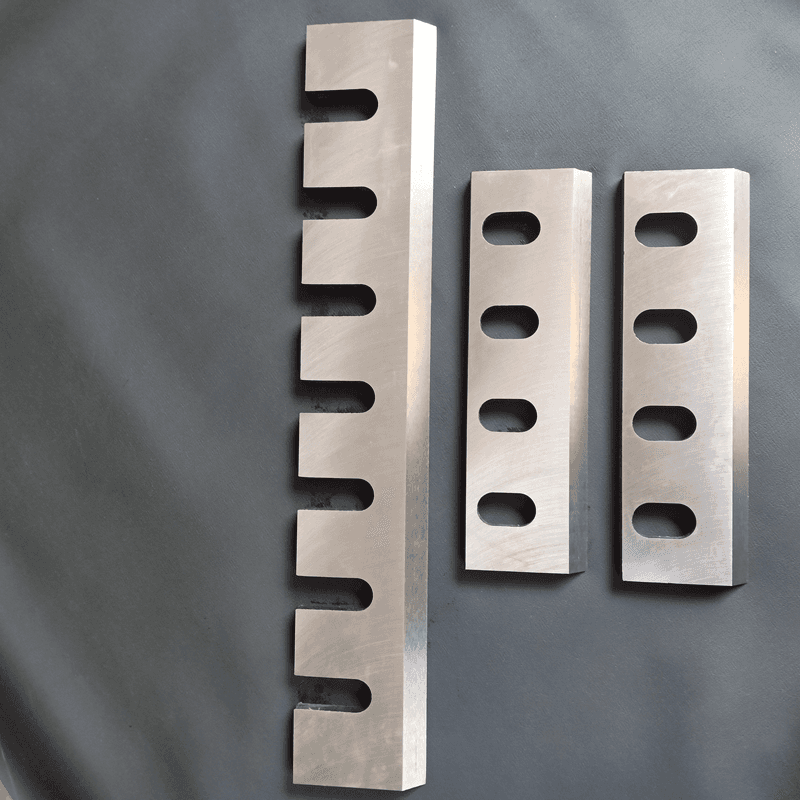
PCB-001
Plastic Crusher Profile Blade
Plastic Crusher Profile Blade is built for pet bottle crushing lines and rigid plastic size reduction. Available in D2 / HSS / 9CrSi / H13 for wear resistance, stable knife clearance, and repeatable sharpening. The profiled body suits fixed or rotary stations where alignment and edge exposure matter.
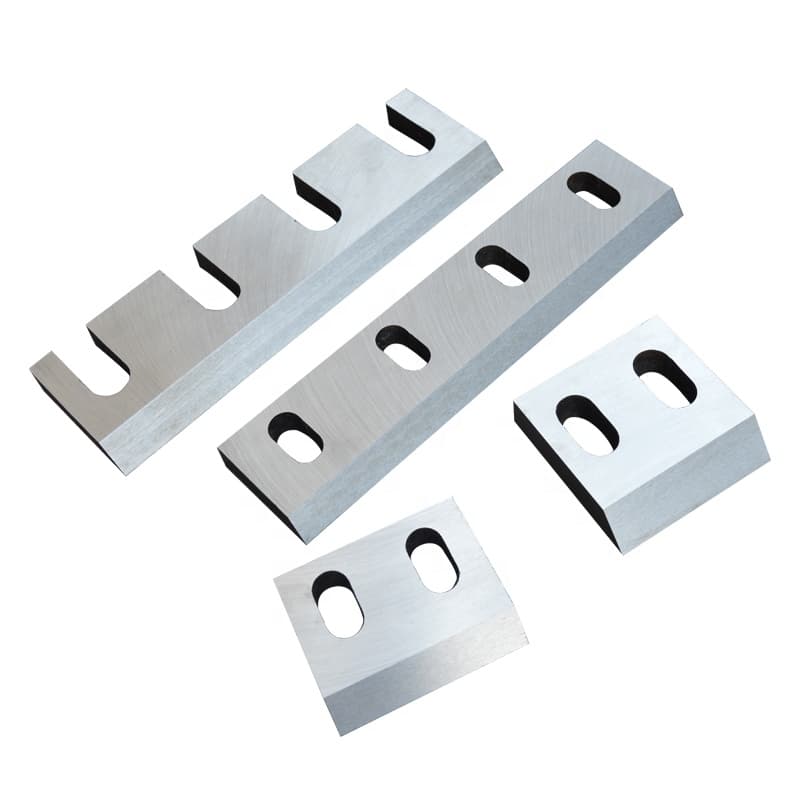
PCB-010
Fixed Plastic Crusher Knife
Fixed Plastic Crusher Knife is built for pet bottle crushing lines and rigid plastic size reduction. Available in D2 / SKD11 / Cr12MoV / HSS for wear resistance, stable knife clearance, and repeatable sharpening. The insert-style format fits compact cutter seats and short replacement positions.
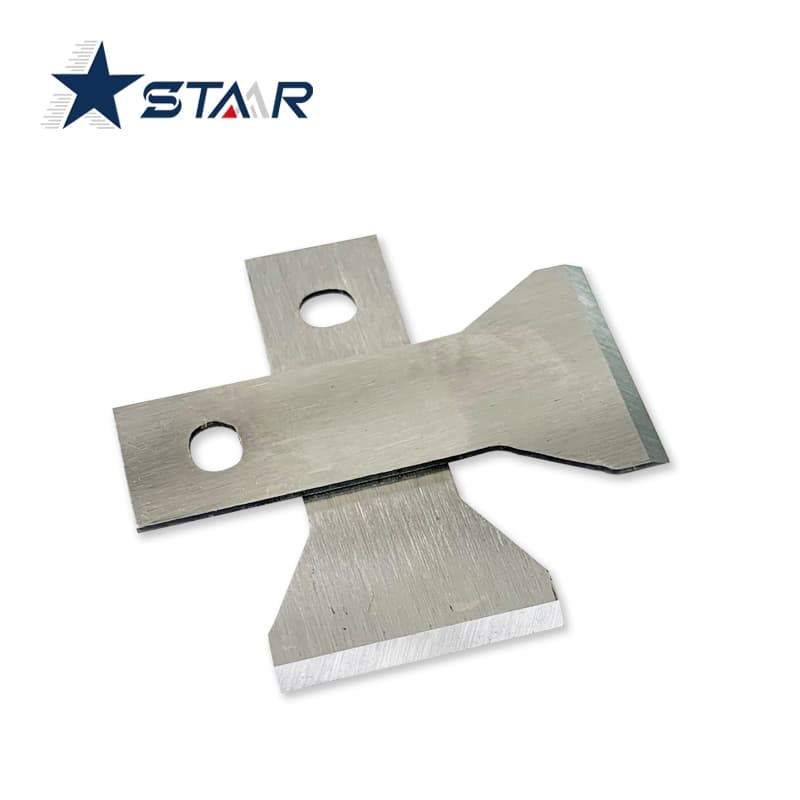
PGK-002
Granulator Insert Knife
Granulator Insert Knife is built for plastic granulation lines and rigid and film regrind. Available in SKD11 / D2 / HSS / 9CrSi for clean regrind, stable clearance, and practical resharpening cycles. The insert-style format fits compact cutter seats and short replacement positions.
GBK-001
Granulator Bed Knife
Granulator Bed Knife is built for granulator bed knife replacement and pet bottle and rigid plastic grinding. Available in SKD11 / D2 / HSS / tungsten carbide for stable rotor clearance and consistent granulation quality. The insert-style format fits compact cutter seats and short replacement positions.
Related catalog categories
Deep reading
Granulator Knife Gap Checklist: Reduce Dust, Fines, and Noise
A practical rotor-to-bed-knife inspection flow for recyclers seeing dusty regrind, noisy cutting, or repeated knife damage after a blade change.
Read articleSingle-Shaft Shredder Knife Indexing: Buyer RFQ Guide
An original buyer guide built from official machine documentation: when indexing helps, when chamber wear matters more, and what to send before requesting a quote.
Read article
Need this applied to your line?
Mention this solution hub in your message so sales engineering opens the thread with the right checklist.