
Textile and carpet recycling: shredder knives wrap, drag, and lose clean bite
For textile waste, carpet rolls, fiber bales, nonwoven trim, and plastic-rich backing, quote the cutting stage first: shredder cutters, counterknives, screens, and downstream granulator knives do not solve the same problem.
Typical field problems
- •Textile, nonwoven, or carpet feed wraps the rotor, drags across the cutter, or makes the shredder draw more current before clean size reduction happens.
- •The buyer asks for replacement shredder knives, but the real complaint may involve screen size, counterknife clearance, ram pressure, backing material, or downstream fiber opening.
- •A worn sample exists, yet the quote needs feed and stage context so the replacement batch does not repeat the same wrapping, tearing, or dirty-output problem.
Buyer conclusion first: if a textile, carpet, nonwoven, or fiber-recycling line is wrapping material around the rotor, dragging instead of cutting, making irregular strips, or overloading the next tearing or sizing stage, the safest buying decision is not simply to ask for a harder shredder knife. Quote the line by single-shaft shredder knife, double-shaft shredder knife, general shredder cutter, granulator knife, and bed knife stage. Textile feed can be soft and flexible, carpet can be tough and layered, and post-shred polymer-rich fractions may need a different fixed-knife or screen review.
Machine-stage fit: official and primary sources treat textile recycling as a staged process, not a single blade purchase. The European Commission textile strategy frames textile circularity around durability, reuse, repair, fiber-to-fiber recycling, and better textile waste management. ANDRITZ presents textile recycling as a process covering textile waste preparation and fiber recovery. SSI calls baled carpet one of the toughest materials to shred. Those sources point to the same RFQ logic: name the material stream, the machine stage, and the target output before choosing the knife family.
RFQ criteria: send the machine brand and model, the exact stage, feed form, target size or output use, old-knife photos with a ruler, installed holder photos, counterknife or anvil photos, screen information if used, and the symptom. Say whether the feed is garment waste, textile trim, nonwoven offcut, carpet tile, broadloom carpet, mixed fiber bales, synthetic fiber, natural fiber, plastic-rich backing, rubber backing, zippers, buttons, clips, or damp material. Before sending the inquiry, compare this page with the new textile application guide, the new textile shredder knife RFQ article, the existing shredder wear solution, and the contact page.
Why textile and carpet recycling needs a stage-first knife quote
Textile and carpet feed creates a different buying problem from rigid plastic or clean production scrap. Flexible cloth can fold before it cuts. Long strips can wrap around rotors. Carpet can combine face fiber, backing, adhesive, filler, and trapped dirt in one layered material. Some lines want coarse opening before sorting. Others want controlled strips before fiber opening, or smaller fractions before separation and reprocessing. A spare knife that fits the holder can still miss the commercial target if the plant is now judged on cleaner fiber recovery, lower wrapping, or steadier downstream feeding.
UNTHA discusses shredding used clothing and textile waste, and its interview format is useful because it connects textile recycling with practical preparation before further processing. Shred-Tech lists textiles and carpet among ST-480 industrial shredder applications and describes knives, hex shafts, knife reversal on overload, conveyors, and chamber serviceability. For a blade buyer, the point is not to copy a machine brochure. The point is to translate it into RFQ language: feed method, cutter configuration, shaft support, service access, overload symptom, and output requirement belong in the first message.
Where Leader Blades parts fit in a textile or carpet recycling line
Leader Blades should be considered for the cutting positions that match the catalog: shredder cutters, single-shaft inserts, double-shaft disc knives, mixed-material shredder knives, granulator knives, and stationary bed knives. Good starting product pages include recycling single-shaft shredder knives, film double-shaft shredder disc knives, multi-material shredder knives, film granulator insert knives, and granulator bed knives.
This boundary matters because textile recycling lines may also include tearing, opening, sorting, dust extraction, metal detection, and other equipment that is not a Leader Blades knife position. If the problem belongs to a non-knife opener or a contamination-removal station, say so. The RFQ can still focus on the cutting positions: the pre-shredder that opens bales, the cutter set that controls strip length, the counterknife or anvil that decides whether material shears or pulls, and the downstream granulator position used only when the fraction is suitable for that stage.
Failure symptoms that change the quote
The useful field language is usually not "knife failed" but "the material is wrapping," "the feed ram keeps cycling," "the line makes ropes," "carpet backing is not opening," "the screen plugs," "the next machine receives strips that are too long," or "the cutter corners chip when hard trims enter." Each symptom changes the commercial decision. Wrapping points toward bite, hook profile, feed pressure, shaft speed, counterknife condition, and strip length. Chipped corners point toward hidden hard parts, fasteners, backing, or impact loading. Dust or fines may point toward too aggressive a downstream stage rather than a better primary cutter.
Republic Machine's carpet shredder sheet is useful because it lists screens for sizing, reversible and resharpenable cutters, bolt-in replaceable tool holders, reversible counterknives, and an adjustable anvil for counterknife clearance. Those are not claims Leader Blades should copy as promises. They are buyer signals. A serious carpet-knife quote should ask whether the current issue is cutter wear, holder damage, screen target, counterknife wear, or anvil clearance. If a buyer sends only outer dimensions, the quote may ignore the reason the last knife set performed poorly.
Practical selection notes for buyers, dealers, and service teams
Use three RFQ levels. Level one is direct replacement because the machine stage is healthy and the buyer only needs scheduled spare knives. Level two is cutter-plus-counterknife review because wrapping, dragging, or screen plugging suggests the cutting pair is no longer acting as a clean shear system. Level three is line-fit review because the feed mix, target size, downstream opener, or polymer-rich fraction changed the duty. The same approach helps regional dealers collect useful information when the plant has no drawing and only phone photos.
For import buyers, use ordinary plant language. "Post-consumer clothing bales," "cotton-rich cutting waste," "synthetic nonwoven trim," "carpet tile with backing," "broadloom carpet rolls," "fiber opener feed," and "plastic-rich backing after sorting" are more useful than a generic request for textile blades. Add whether the order is emergency shutdown spares, a trial batch, or a replacement set copied from a worn sample. That tells the supplier how much geometry review, material review, and stage discussion is needed before production.
What to send for a faster textile or carpet knife quote
- Machine brand, model, shaft count, rotor type, and exact cutting stage if known.
- Feed stream: garments, textile trim, nonwoven, carpet tile, broadloom carpet, fiber bales, mixed rags, synthetic fiber, natural fiber, or backing-rich material.
- Contamination notes: zippers, buttons, clips, metal pieces, sand, rubber backing, adhesive, moisture, or mixed plastic film.
- Target output: bale opening, coarse strips, screen-sized shred, fiber-opener feed, backing separation, granulator feed, or controlled regrind.
- Old knife photos: face, side profile, thickness, hole pattern, edge damage, and installed pocket or holder photos.
- Counterknife, anvil, screen, holder-seat, and feed-ram photos when those parts affect bite and clearance.
- Current symptom: wrapping, dragging, ropes, screen plugging, high current, chipped corners, uneven wear, poor downstream feeding, or excessive fines.
- Commercial request: direct replacement, trial lot, emergency shutdown spare set, or broader stage-fit review.
Use the contact form when the photo set is ready. If you only have a worn sample, say that clearly. Worn-sample quoting is normal in aftermarket textile and carpet recycling, but the sample should be paired with stage and symptom so the next batch is not just a precise copy of the previous failure.
FAQ and buyer guidance
Do I need to mention carpet backing or fasteners? Yes. Backing, rubber, adhesive, zippers, buttons, clips, and trapped dirt can change cutter loading and edge damage. Can Leader Blades quote every textile recycling machine stage? No. We quote knife, cutter, granulator, bed-knife, and counterknife positions that match our catalog. If a stage is a fiber opener or another non-knife process, name it so the RFQ stays focused. Which pages should I compare next? Start with the textile application guide, textile RFQ article, single-shaft shredder knives, general shredder knives, and granulator bed knives.
Primary sources used on this page: European Commission textile strategy, ANDRITZ textile recycling, UNTHA textile recycling discussion, Shred-Tech ST-480 page, SSI carpet shredding video page, and Republic Machine carpet shredder sheet.
Example parts from our catalog
Close shapes for quoting—send ruler photos or drawings so the factory confirms fit before you lock in quantity.
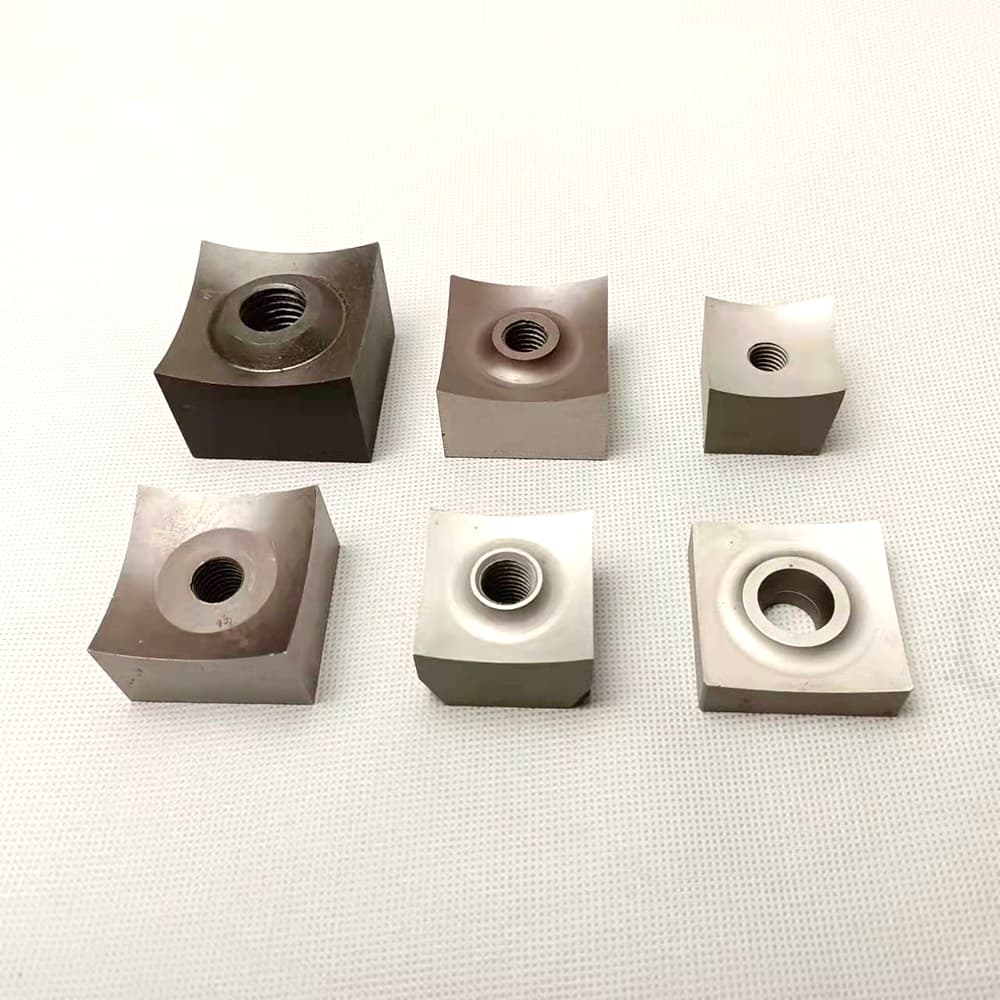
SSK-009
Recycling Single-Shaft Shredder Knife
Recycling Single-Shaft Shredder Knife is built for single-shaft shredders and film and woven bag shredding. Available in D2 / SKD11 / carbide-tipped alloy steel for wear resistance and repeated indexing in shredder rotors. The cutter geometry suits stacked shredder rotors and indexable cutter assemblies.
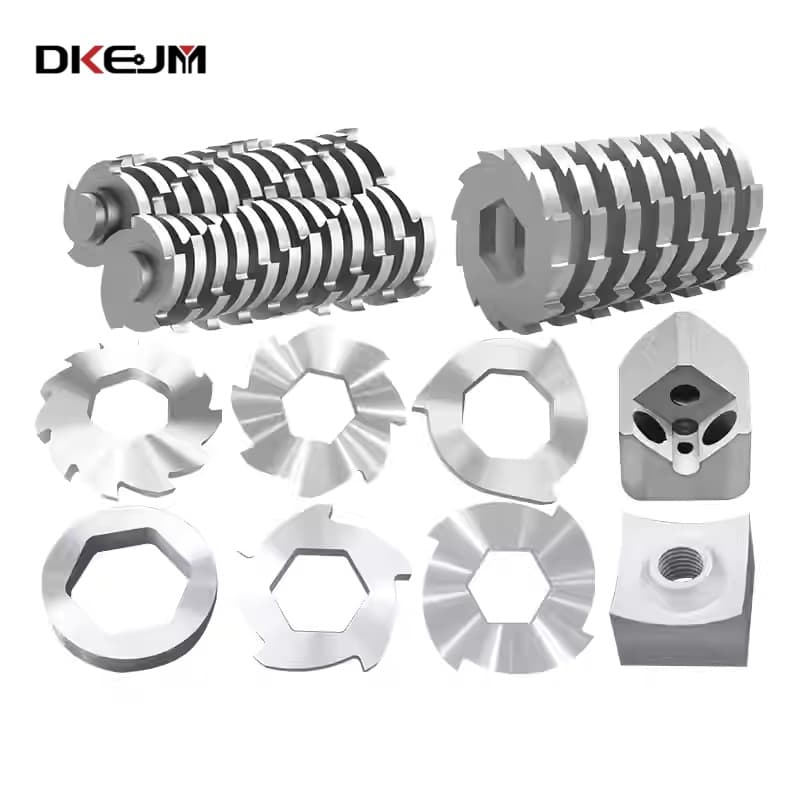
DSK-005
Film Double-Shaft Shredder Disc Knife
Film Double-Shaft Shredder Disc Knife is built for double-shaft shredders and bulky plastic waste reduction. Available in D2 / alloy steel / H13 / SKD11 for torque-heavy duty, impact resistance, and manageable maintenance cost. The cutter geometry suits stacked shredder rotors and indexable cutter assemblies.
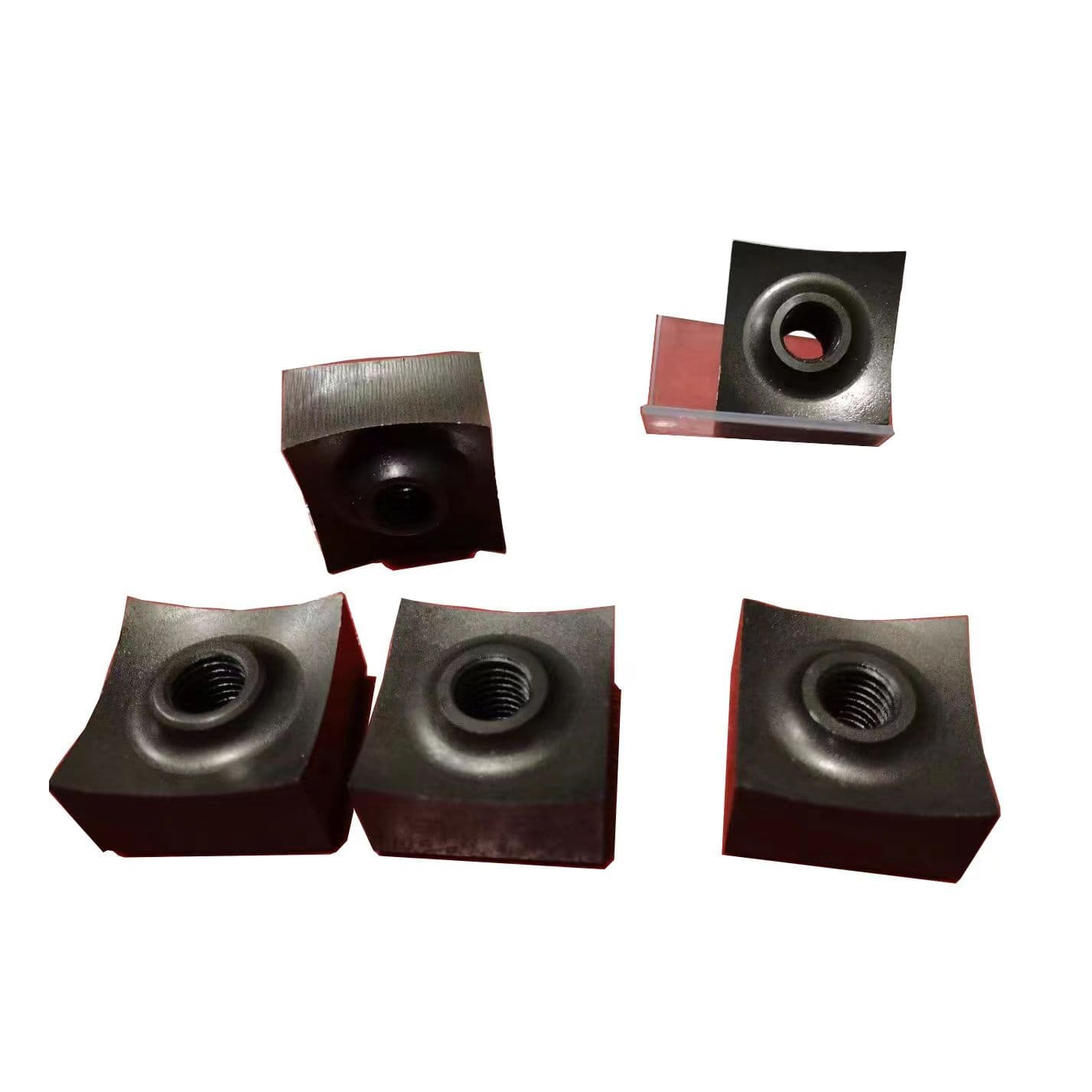
GSK-003
Multi-Material Shredder Knife
Multi-Material Shredder Knife is built for industrial recycling lines and mixed scrap size reduction. Available in SKD11 / D2 for mixed-feed shredding and steady replacement life. The profiled body suits fixed or rotary stations where alignment and edge exposure matter.
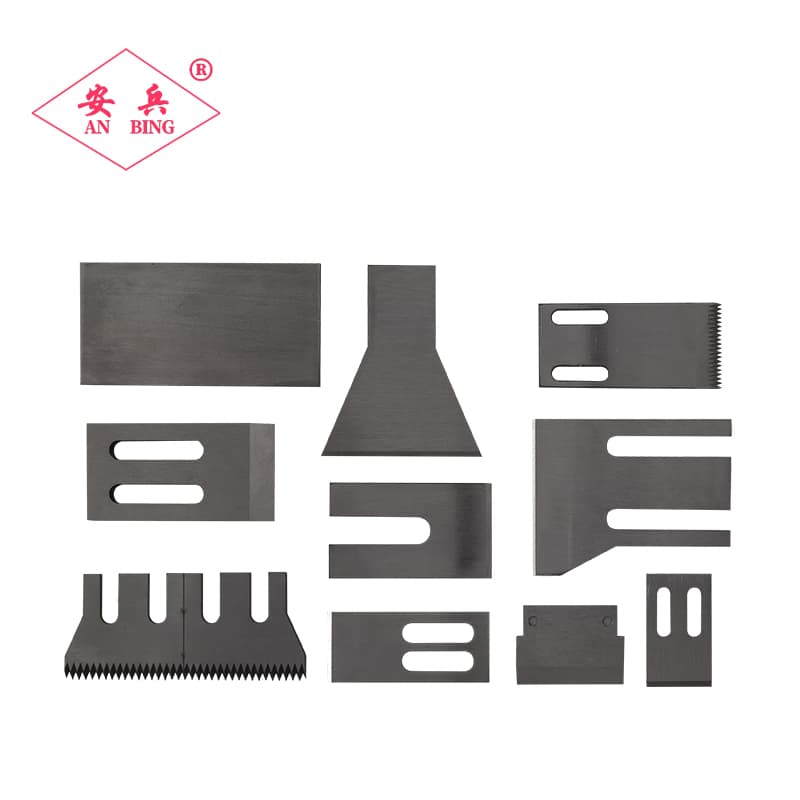
PGK-004
Film Granulator Insert Knife
Film Granulator Insert Knife is built for film and woven bag granulation and edge trim recovery. Available in SKD11 for clean regrind, stable clearance, and practical resharpening cycles. The insert-style format fits compact cutter seats and short replacement positions.
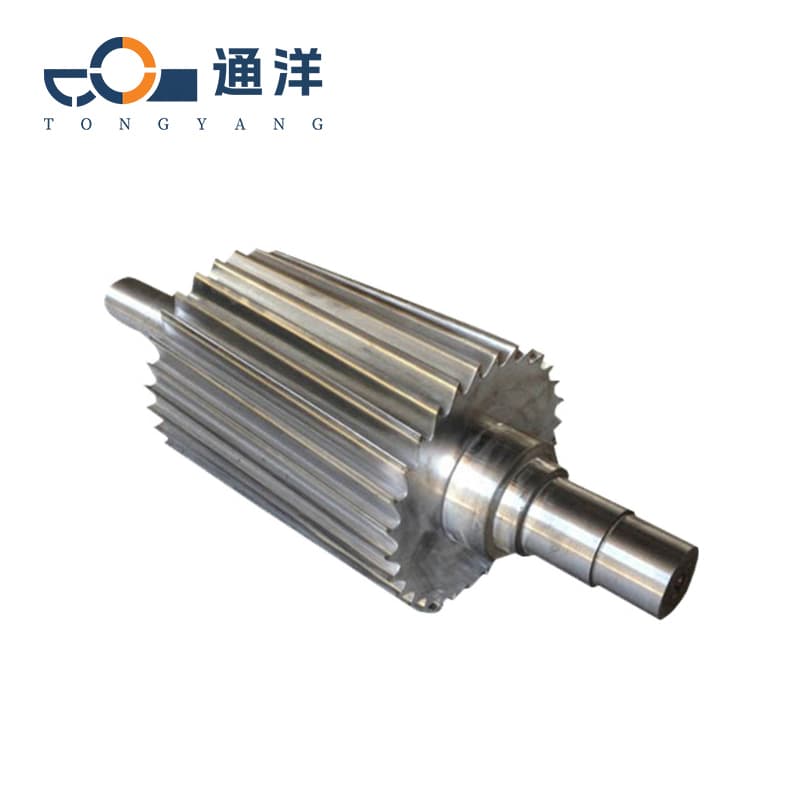
GBK-001
Granulator Bed Knife
Granulator Bed Knife is built for granulator bed knife replacement and pet bottle and rigid plastic grinding. Available in SKD11 / D2 / HSS / tungsten carbide for stable rotor clearance and consistent granulation quality. The insert-style format fits compact cutter seats and short replacement positions.
Related catalog categories
Deep reading
Textile Shredder Knife RFQ Guide: What Buyers Should Send Before Ordering Cutters
A source-backed buyer guide for textile, carpet, nonwoven, and fiber recyclers ordering shredder knives, counterknives, screens, or downstream granulator knives.
Read articleSingle-Shaft Shredder Knife Indexing: Buyer RFQ Guide
An original buyer guide built from official machine documentation: when indexing helps, when chamber wear matters more, and what to send before requesting a quote.
Read articleDouble-shaft shredder cutter RFQ guide: what buyers should confirm before reordering
A source-backed buyer guide for double-shaft shredder cutters: feed fit, stack logic, counter-side clues, and the RFQ details that reduce wrong-fit reorders.
Read article
Need this applied to your line?
Mention this solution hub in your message so sales engineering opens the thread with the right checklist.