
Tire recycling lines: cutter life fell, wire liberation worsened, and downstream granulation drifted
For tire recyclers, TDF processors, and aftermarket knife buyers, the low-risk fix is usually to review the primary shredder, secondary cutting stage, and granulation target together instead of buying a harder knife in isolation.
Typical field problems
- •Primary cutters last fewer hours after the feed changed from passenger tires to truck, OTR, or mixed scrap, but the RFQ still asks only for the old geometry.
- •Wire liberation, chip size, or crumb consistency worsened downstream even though the plant only replaced the obvious shredder knife set.
- •The buyer has photos and worn samples, but not a reliable chamber drawing for the shredder, rasper, or granulator stage.
Buyer conclusion first: if a tire recycling line is suddenly losing cutter life, making dirtier chips, or sending poorly liberated rubber into the next machine, the safest commercial action is to quote the double-shaft shredder knife stage, the secondary shredder cutter stage, and the granulation knife stage as one system. Ordering a harder knife alone often recreates the same complaint after startup because the plant problem is really stage fit, not just steel grade.
Machine-stage fit: official tire-recycling sources consistently separate coarse size reduction, secondary liberation, steel removal, fiber control, and final granulation. UNTHA's tire application page frames the line around pre-shredding and downstream products such as TDF/TDA, chips, mulch, granulate, and powder. Genox's tire recycling system page describes staged reduction from rough shredding through wire removal and granulation. That means buyers should identify whether the RFQ is for primary torque-heavy cutters, secondary liberating cutters, or granulator knives before requesting price.
RFQ criteria: send tire mix, target output, machine brand and model, current symptom, installed knife photos, and the next machine stage that is now underperforming. Add whether the plant is selling TDF/TDA, wire-free granulate, colored mulch, or crumb for molded-rubber applications. Before you send the RFQ, compare this page with our new waste tire and rubber application guide, our new tire recycling RFQ article, and the contact page.
Tire processors often describe problems in plant language rather than engineering language. They say the line is pulling too many amps, cutters are chipping, chips are carrying too much wire, granulators are making heat, or the crumb is drifting out of spec. Those are good commercial signals. A blade supplier still has to convert them into a buying decision about stage responsibility. Is the failure in a slow-speed primary shredder, in a secondary shredder or rasper, in the granulator, or in the way those stages are now being asked to work together?
USTMA's tire recycling page shows why that stage question matters commercially. The organization links recycled tires to TDF, civil engineering uses, molded products, sports and playground surfaces, and other downstream markets. Each market tolerates a different balance of wire content, chip shape, granulate cleanliness, and cost per ton. A plant that only needs robust TDF does not buy knives the same way as a plant selling cleaner granulate or crumb rubber into more demanding downstream processes.
Official machine-maker documentation points the same direction. SSI's T160 Tri-Shear page treats OTR tire reduction as a heavy-duty size-reduction problem with staged output control. SSI's SR900 page positions secondary tire shredding around replaceable screens, reusable anvils, and fast knife changes. Genox then carries the buyer forward into granulation, steel separation, and cleaner rubber output. In procurement terms, that means knife life and wire liberation should be reviewed together, because one stage can make the next stage look like a knife problem even when it is really a feed-preparation problem.
Why cutter life and wire liberation belong in the same discussion
Buyers often separate wear life from output quality because the two complaints sit with different teams. Maintenance reports short knife life. Operations reports dirty chips or poor wire removal. Commercially, they are often the same issue. If the primary shredder is now sending more irregular strips, thicker chunks, or unstable feed to the secondary stage, the next machine works harder, heats more, and produces less consistent liberated rubber. The plant may then blame the secondary knives when the real purchasing decision should have started one stage earlier.
This is especially common when the feed mix changed. Passenger tires, truck tires, bead-heavy material, sidewalls, OTR segments, and mixed industrial rubber do not load the chamber in the same way. A geometry that was commercially acceptable for one tire mix can become expensive for another even if the part number still fits the holder. That is why the RFQ should say what changed in the feed, not just what dimensions the last knife had.
Machine-stage fit for tire recyclers and TDF plants
For coarse reduction into TDF/TDA, the commercial priority is usually torque tolerance, predictable bite, controllable maintenance cost, and chamber durability. In that case, the buyer should focus first on the primary cutter family, holder style, number of knife edges, and whether the downstream customer really needs a tighter size range. For plants chasing cleaner chips before secondary liberation, the priority shifts toward strip consistency, screen interaction where applicable, and stable handoff into the next machine. For crumb-rubber lines, the granulator and fixed-knife stage matter more because heat, fines, and wire carryover become harder to hide commercially.
UNTHA explicitly links the same material stream to outputs ranging from TDF/TDA to mulch, granulate, and powder. Genox explicitly separates rough shredding, steel separation, and granulation. That staged logic is exactly how a buyer should build the RFQ. If the plant is buying for the first stage only, say so. If the commercial complaint is really in wire liberation or granulate cleanliness, say that too. Those are different knife-buying problems.
What a supplier should confirm before production
A serious tire-recycling RFQ should confirm the machine stage, tire mix, target output size, cutter count, knife thickness, outside diameter or profile, holder or pocket style, bolt pattern where relevant, screen or output-control hardware where present, the current wear symptom, and the exact next-stage complaint. If the plant wants to reduce knife cost per ton, that is a different target from improving wire liberation or stabilizing crumb size. The supplier should know which commercial target matters most before recommending D2, SKD11, Cr12MoV, carbide options, or a geometry review from a worn sample.
Installed photos matter because tire-recycling wear is rarely uniform. One side of the chamber may take more load, one row may chip faster, or one screen section may already be distorting the output. A buyer who sends only outside dimensions may still get a budget quote, but not always the best production quote. If you do not have a drawing, say that directly and work from worn parts plus installed photos. That is normal in aftermarket shredder work.
Practical selection notes for dealers, service teams, and import buyers
For dealers, the safest structure is to separate the request into three commercial levels. Level one is direct knife replacement because the customer only needs shutdown spares and the chamber is healthy. Level two is cutter-plus-holder or cutter-plus-anvil review because support wear is already visible. Level three is stage review because the complaint includes dirty output, unstable liberation, higher granulator load, or a feed change that altered the economics of the line. This framing keeps the quotation honest and lowers emergency re-orders after the first batch ships.
For import buyers and regional parts traders, the lowest-risk path is to shortlist the nearest geometry from our tire recycling double-shaft shredder knife, rubber double-shaft shredder cutter, tire shredder knife, and rubber granulator insert knife pages, then send installed-part photos through the RFQ form. If the chamber problem resembles a broader shredder fit issue, also compare our general shredder wear solution and the single-shaft shredder buyer guide.
Common buyer mistake
The most common mistake in this vertical is to treat the tire line as one knife category. It is not. Primary tire cutters, secondary liberating cutters, and granulator knives may all wear on the same material stream, but they solve different commercial problems. If the buyer asks only for the last part number, the quote may reproduce the last failure. If the buyer identifies the machine stage, target output, and next-stage complaint, the quotation becomes much more useful.
FAQ: Do I need to mention the granulator if I only want primary shredder knives?
Yes, if the commercial complaint is poor wire liberation, hot running, or dirty crumb downstream. The next machine stage helps explain whether the real issue is in primary reduction, secondary liberation, or granulation.
FAQ: What if we process both truck tires and smaller passenger tires?
Say that directly in the RFQ. Mixed tire streams change chamber loading, wear pattern, and the safest knife-life strategy, even if the machine geometry stays the same.
FAQ: Can you quote from worn parts and photos?
Yes. Worn parts, installed photos, the tire mix, target output, and the current symptom are usually enough to start technical review.
FAQ: Which internal pages should I compare next?
Compare our waste tire and rubber application guide, tire recycling RFQ article, double-shaft shredder knives, general shredder knives, and contact page.
Primary sources used on this page: USTMA tire recycling overview, UNTHA tire recycling application page, Genox tire recycling system, SSI Uni-Shear SR900, and SSI T160 Tri-Shear for OTR tires.
Example parts from our catalog
Close shapes for quoting—send ruler photos or drawings so the factory confirms fit before you lock in quantity.
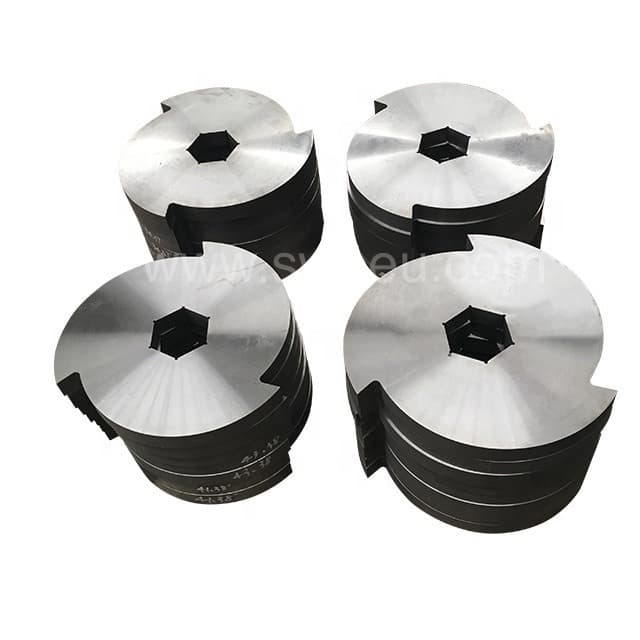
DSK-001
Tire Recycling Double-Shaft Shredder Knife
Tire Recycling Double-Shaft Shredder Knife is built for tire and rubber pre-shredding and bulky waste volume reduction. Available in SKD11 / D2 / Cr12MoV for torque-heavy duty, impact resistance, and manageable maintenance cost. The cutter geometry suits stacked shredder rotors and indexable cutter assemblies.
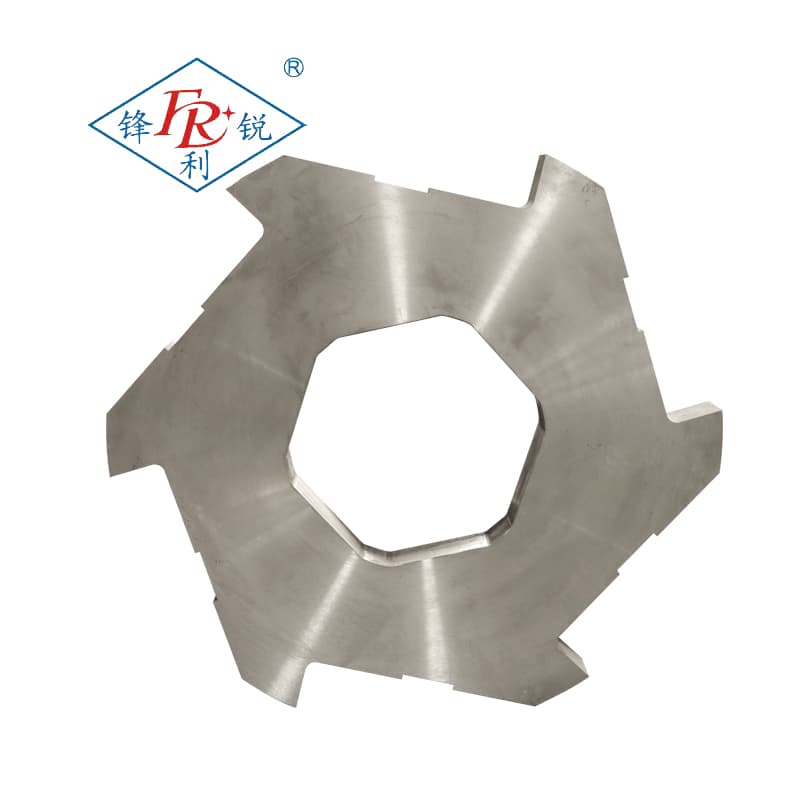
DSK-009
Rubber Double-Shaft Shredder Cutter
Rubber Double-Shaft Shredder Cutter is built for tire and rubber pre-shredding and bulky waste volume reduction. Available in D2 / alloy steel / H13 / SKD11 for torque-heavy duty, impact resistance, and manageable maintenance cost. The cutter geometry suits stacked shredder rotors and indexable cutter assemblies.
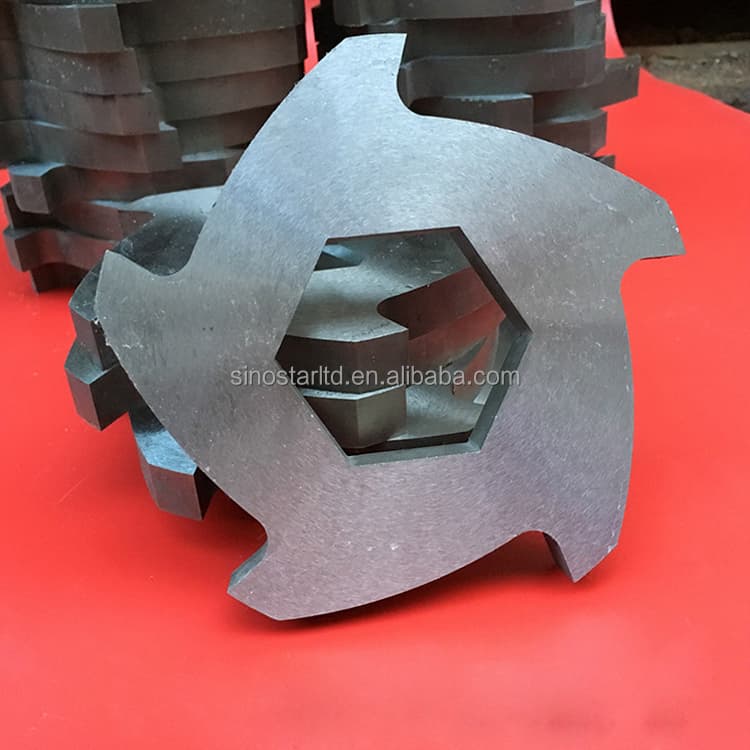
GSK-002
Tire Shredder Knife
Tire Shredder Knife is built for tire and rubber shredding and mixed scrap size reduction. Available in SKD11 / Cr12MoV / 9CrSi for mixed-feed shredding and steady replacement life. The profiled body suits fixed or rotary stations where alignment and edge exposure matter.
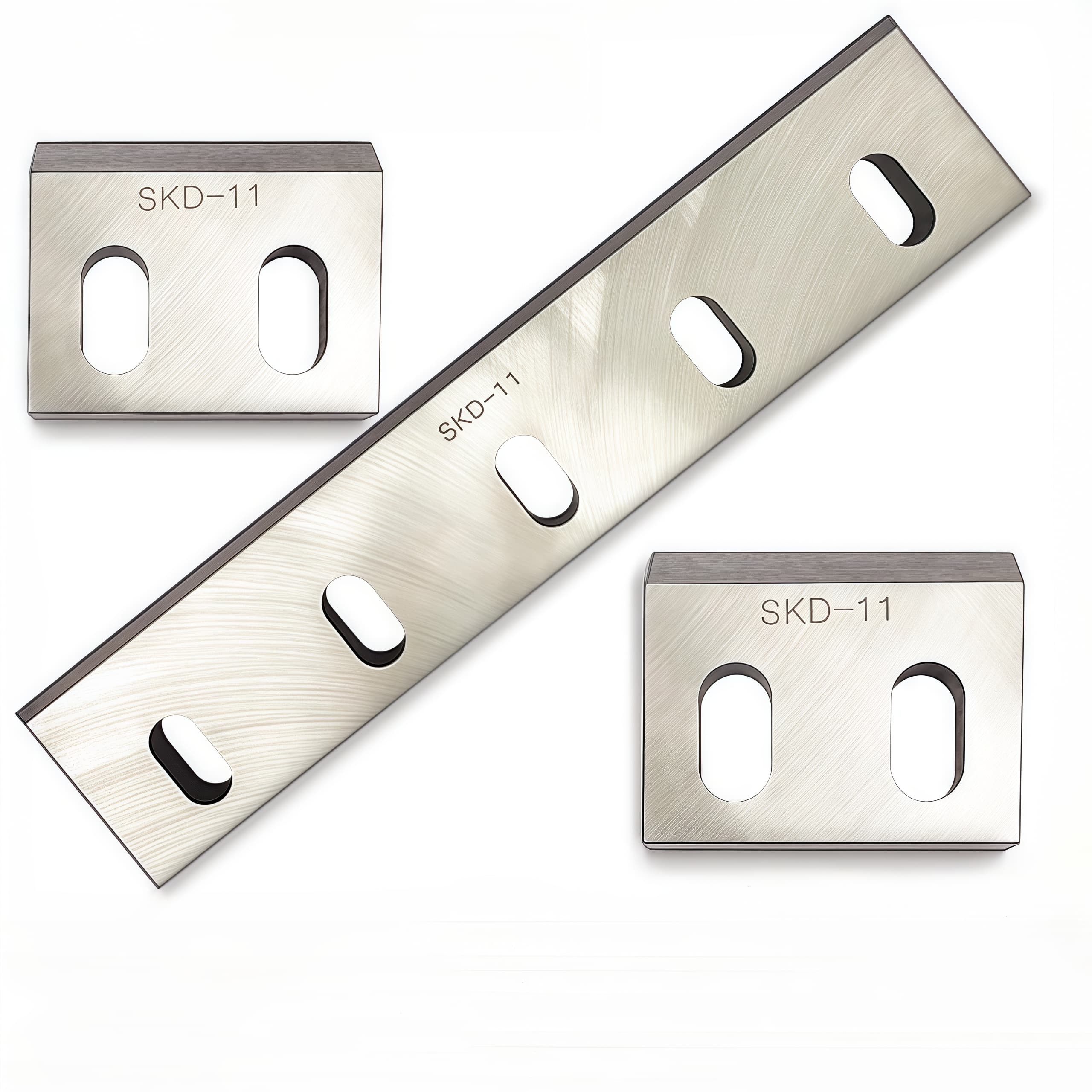
PGK-006
Rubber Granulator Insert Knife
Rubber Granulator Insert Knife is built for rubber scrap granulation and elastomer trim recovery. Available in SKD11 / D2 / HSS / 9CrSi for clean regrind, stable clearance, and practical resharpening cycles. The insert-style format fits compact cutter seats and short replacement positions.
Related catalog categories
Deep reading
Tire Recycling Knife RFQ Guide: What Buyers Should Send Before Ordering Shredder or Granulator Cutters
A source-backed buyer guide for tire recyclers ordering primary shredder cutters, secondary shredder knives, or rubber granulator blades for TDF, chip, mulch, granulate, or crumb lines.
Read articleSingle-Shaft Shredder Knife Indexing: Buyer RFQ Guide
An original buyer guide built from official machine documentation: when indexing helps, when chamber wear matters more, and what to send before requesting a quote.
Read article
Need this applied to your line?
Mention this solution hub in your message so sales engineering opens the thread with the right checklist.