
Typical tire-line problems behind the RFQ
- •Primary cutters are wearing faster after the plant changed tire mix or output target, but the RFQ still asks only for the old geometry.
- •Secondary chips now carry more wire or feed the granulator less consistently even though the plant only replaced one cutter family.
- •Granulator temperature, fines, or crumb consistency have drifted, but the buyer is not sure whether the real purchasing problem starts upstream.
- •The maintenance team has worn samples and chamber photos but no complete drawing for the shredder, rasper, or granulator stage.
Buyer conclusion: tire-recycling knives should be quoted by machine stage and end-product target
USTMA shows that recycled tires move into different downstream markets, from tire-derived fuel and civil engineering to molded products and sports or playground surfaces. Those markets reward different balances of throughput, chip quality, wire liberation, and granulate cleanliness. That means a serious RFQ should say what the line is trying to sell, not just what knife fits the machine.
UNTHA's tire application page and Genox's tire recycling system page both present tire processing as a staged system rather than a single knife purchase. For buyers, the practical conclusion is simple: primary shredder cutters, secondary liberation cutters, and granulator knives should be quoted according to stage responsibility and output target, not as one undifferentiated spare family.
Machine-stage fit: primary shredding, secondary liberation, and granulation are different application contexts
Primary shredding is usually a torque-heavy reduction duty. The commercial question at this stage is not only how long the cutter lasts, but whether the stage is producing the correct handoff for the next machine. SSI's T160 OTR tire case is useful because it frames heavy tire reduction around staged size reduction rather than around one universal cutter claim.
Secondary shredding and rasping sit closer to liberation performance. SSI's SR900 page describes replaceable screens, reusable anvils, and fast knife changes on a secondary tire-reduction stage. For buyers, that means the RFQ should mention whether the complaint is chamber wear, dirty chips, more wire carryover, or unstable feed into steel separation and granulation.
Granulation is different again. Once the plant is chasing cleaner granulate or crumb, fixed-knife condition, heat, fines, and feed consistency matter more. That is why this page should be reviewed together with our tire recycling solution page and our tire recycling RFQ guide.
Where these knife families fit on tire and rubber recycling lines
Waste-tire recycling lines normally use several different cutting families across the plant. Buyers should identify which family the RFQ actually belongs to before they compare prices.
- Double-shaft shredder knives are commonly tied to coarse tire reduction, bulky feed intake, and robust first-stage duty.
- General industrial shredder cutters often appear on secondary size-reduction or liberation duty where cleaner output and support-part condition become more important.
- Rubber granulator knives matter when the plant is targeting cleaner granulate, controlled chip size, or crumb-rubber feed for downstream separation and finishing.
For the closest product routes, compare our double-shaft shredder knives, general shredder knives, and granulator knives categories, then open representative parts such as the tire recycling double-shaft shredder knife, tire shredder knife, and rubber granulator insert knife.
Commercial target first: TDF/TDA, chips, mulch, granulate, and crumb do not reward the same knife strategy
A line selling TDF/TDA may optimize around throughput, robust chamber behavior, and predictable maintenance cost. A line selling cleaner chips into liberation, mulch, or crumb-rubber work may care more about output shape, wire carryover, and stable downstream load. That commercial difference belongs inside the RFQ.
UNTHA explicitly links tire recycling to TDF/TDA, chips, mulch, granulate, and powder. Genox explicitly links staged reduction to steel removal and cleaner rubber output. Those two official perspectives help buyers decide whether the right purchasing goal is lower cutter cost per ton, better liberation, cleaner granulate, or a better handoff into the next machine.
If the business complaint is now in wire carryover, crumb heat, or granulator stability, the RFQ should say that directly instead of presenting the job as a simple knife replacement. A machine-stage quote without the end-product target is often too narrow to be commercially useful.
Practical selection notes for buyers, service teams, and regional parts dealers
The safest quoting structure is to separate the job into direct replacement, cutter-plus-support review, or broader stage review. Direct replacement is appropriate when the chamber is healthy and the plant only needs shutdown spares. Cutter-plus-support review fits cases where holders, anvils, or fixed positions may now be influencing output. Stage review is appropriate when the complaint includes dirty chips, unstable liberation, or hotter downstream running.
For dealers and maintenance teams, it helps to say whether the request is urgent shutdown coverage, a trial batch, or a repeat spare program. That framing lets the supplier decide whether the customer needs the closest existing geometry, a worn-sample review, or a more explicit chamber-fit discussion before steel is cut.
If your line also runs mixed industrial rubber rather than only end-of-life tires, mention that early. Mixed rubber, tire mix changes, or a move toward cleaner granulate can all change the safest knife-life strategy even when the machine model stays the same.
What to send for a fast waste-tire and rubber knife quotation
The fastest RFQs combine fit data with line context. Send these items in the first email where possible:
- Machine brand, model, and serial number if known
- Exact stage: primary shredder, secondary shredder, rasper, or granulator
- Feed mix: passenger tires, truck tires, OTR sections, mixed tires, or industrial rubber
- Current commercial target: TDF/TDA, chips, mulch, granulate, or crumb
- Installed photos of knives, holders, anvils, pockets, or fixed knives
- Current symptom: short life, chipped corners, more wire carryover, hotter running, dirty chips, or unstable granulator feed
- Whether you want direct replacement, a trial lot, or a broader technical review
If you only have worn samples, say so directly. That is normal in aftermarket tire recycling. Good photos, the stage description, and the current downstream complaint are often enough to start review. When you are ready, send the package through the contact page.
Representative parts for this line
Use the closest shape below as your RFQ reference, then send dimensions or old-blade photos for fit review.
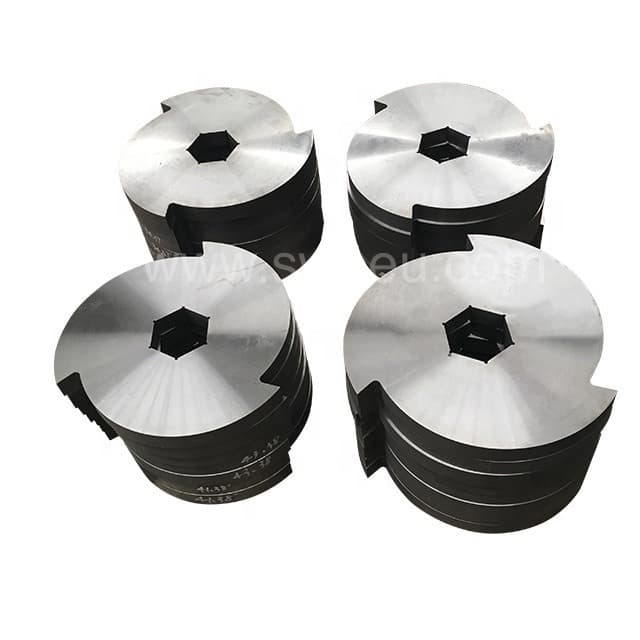
DSK-001
Tire Recycling Double-Shaft Shredder Knife
Tire Recycling Double-Shaft Shredder Knife is built for tire and rubber pre-shredding and bulky waste volume reduction. Available in SKD11 / D2 / Cr12MoV for torque-heavy duty, impact resistance, and manageable maintenance cost. The cutter geometry suits stacked shredder rotors and indexable cutter assemblies.
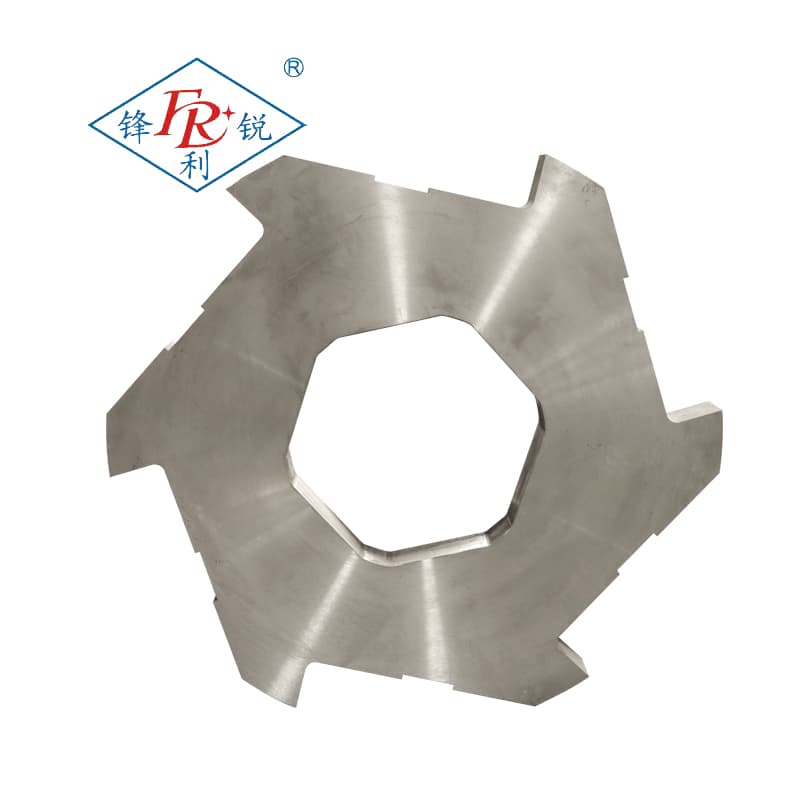
DSK-009
Rubber Double-Shaft Shredder Cutter
Rubber Double-Shaft Shredder Cutter is built for tire and rubber pre-shredding and bulky waste volume reduction. Available in D2 / alloy steel / H13 / SKD11 for torque-heavy duty, impact resistance, and manageable maintenance cost. The cutter geometry suits stacked shredder rotors and indexable cutter assemblies.
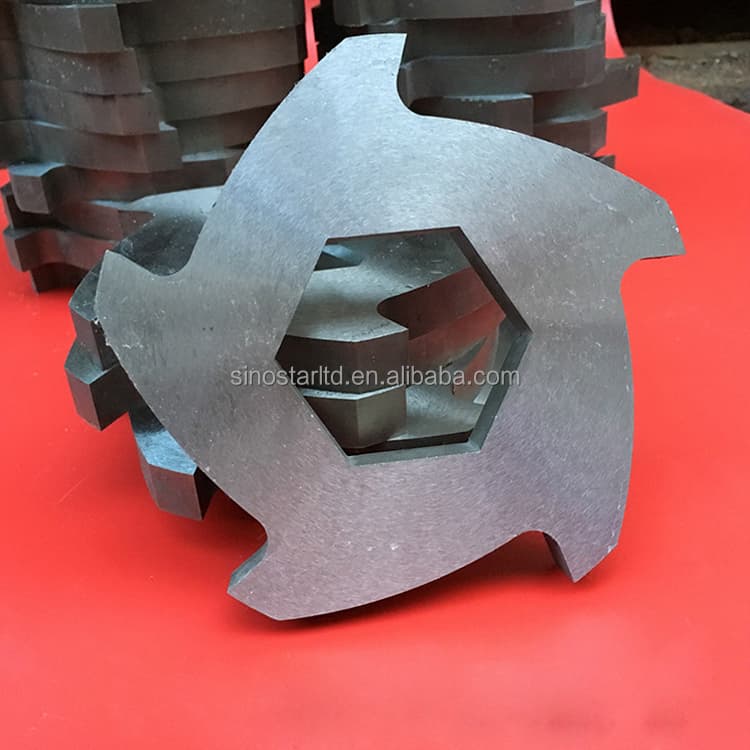
GSK-002
Tire Shredder Knife
Tire Shredder Knife is built for tire and rubber shredding and mixed scrap size reduction. Available in SKD11 / Cr12MoV / 9CrSi for mixed-feed shredding and steady replacement life. The profiled body suits fixed or rotary stations where alignment and edge exposure matter.
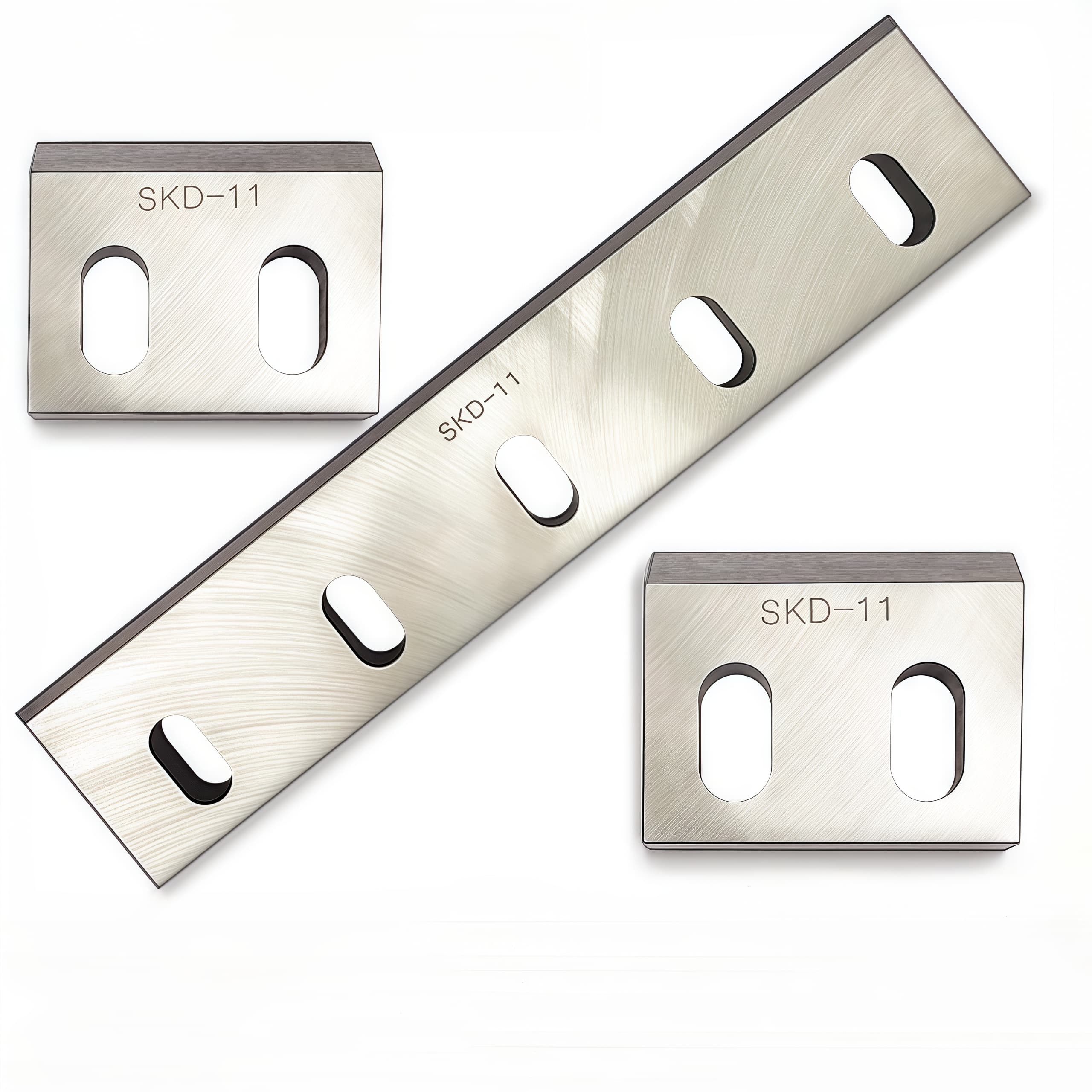
PGK-006
Rubber Granulator Insert Knife
Rubber Granulator Insert Knife is built for rubber scrap granulation and elastomer trim recovery. Available in SKD11 / D2 / HSS / 9CrSi for clean regrind, stable clearance, and practical resharpening cycles. The insert-style format fits compact cutter seats and short replacement positions.
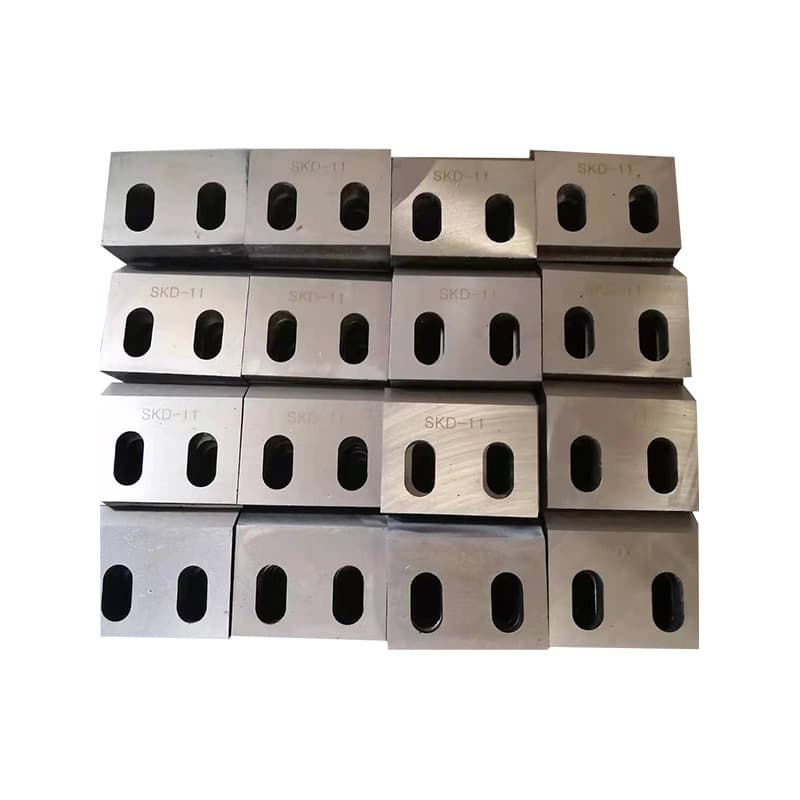
PGK-008
Rubber SKD11 Granulator Knife
Rubber SKD11 Granulator Knife is built for rubber scrap granulation and elastomer trim recovery. Available in SKD11 / D2 / HSS / 9CrSi for clean regrind, stable clearance, and practical resharpening cycles. The profiled body suits fixed or rotary stations where alignment and edge exposure matter.
Related knife categories
Related articles
Tire Recycling Knife RFQ Guide: What Buyers Should Send Before Ordering Shredder or Granulator Cutters
A source-backed buyer guide for tire recyclers ordering primary shredder cutters, secondary shredder knives, or rubber granulator blades for TDF, chip, mulch, granulate, or crumb lines.
Read articleSingle-Shaft Shredder Knife Indexing: Buyer RFQ Guide
An original buyer guide built from official machine documentation: when indexing helps, when chamber wear matters more, and what to send before requesting a quote.
Read articleWaste tire and rubber recycling knives FAQ
Which knife family should we start with on a tire-recycling line?+
Do we need to mention the downstream product in the RFQ?+
Can you quote from worn parts and chamber photos?+
Why should the granulator stage be mentioned if the current issue looks like a shredder problem?+
Which internal pages should we compare before sending the RFQ?+
Primary machine-maker and industry sources behind this guide
This guide is written from official tire-recycling, shredder, and downstream-processing documentation. The source set below was used to frame machine-stage fit, end-product targets, and RFQ structure.
USTMA
Tire recycling overview
USTMA maps recycled tires to multiple downstream markets, which is useful for buyer-side output targeting and RFQ framing.
View sourceUNTHA
Rubber tires application page
UNTHA connects staged tire processing to outputs such as TDF/TDA, chips, mulch, granulate, and powder, which helps buyers define stage fit.
View sourceGenox
Tire recycling system
Genox describes the staged system from rough shredding through steel separation and granulation, directly supporting application-stage selection.
View sourceSSI
Uni-Shear SR900
SSI highlights secondary tire reduction with replaceable screens, reusable anvils, and quick knife changes, which is useful for RFQ planning.
View sourceSSI
T160 Tri-Shear for OTR tires
SSI frames very heavy tire reduction as staged size reduction, reinforcing the need to identify whether the RFQ belongs to first-stage duty or later-stage liberation.
View sourceNeed waste-tire or rubber knives reviewed against your real line stage?
Send tire mix, machine stage, target output, installed-part photos, and the current downstream complaint. We can review direct replacement or a broader stage-fit issue before production.