
Typical tire-line problems behind the RFQ
- •Chip size drifts upward, steel remains attached, or the downstream granulator starts creating more heat and fines
- •Maintenance teams can identify the old knife, but not the real machine stage, stack-tolerance issue, or line-fit problem
- •The plant needs replacement cutters quickly, yet buying "the same knife again" has already led to repeated downtime
- •The buyer wants one spare set that covers shredder, rasper, and granulator logic together before the next shutdown
Buyer conclusion: tire knives should be quoted by machine stage and output target
The safest commercial starting point on a tire-recycling line is to quote knives by machine stage, target output, and line symptom, not by outside dimensions alone. The USTMA Scrap Tire Handbook treats processed tire material by shred sizing, nominal chip size, and end-use route. In practice, that means a buyer asking for "tire shredder knives" may actually be purchasing for coarse whole-tire downsizing, chip-sizing for TDF or TDA, wire-liberation before finer reduction, or feed preparation for crumb rubber. Those are different jobs, even if all of them happen on the same line.
That is why we recommend quoting this application as a connected package of double-shaft shredder knives, general shredder knives, and granulator-knife families, then narrowing the RFQ to the actual stage. If the complaint includes oversized chips, poor steel liberation, hot granulation, or sharply reduced life after a recipe change, the buyer is no longer ordering a simple spare. The buyer is ordering stage fit.
Machine-stage fit: whole-tire downsizing, chip control, wire liberation, and granulation are different knife jobs
Official tire-processing references consistently describe the line as a sequence instead of one generic cutting chamber. CM Shredders presents TDF and aggregate systems through coordinated shredding, screening, and chipping. ELDAN's Multi Purpose Rasper is positioned as a dedicated heavy-duty stage for tire and steel-cord reduction, while ELDAN's HDG240 handles later granulation duty. Buyers should use the same logic in procurement: say whether the order is for primary downsizing, secondary chip control, steel liberation, or granulation.
This stage language matters because the failure mode changes with the stage. Early stages care about bite, torque stability, stack tolerance, and resistance to dirty or mixed feed. Mid-stages care more about chip uniformity, steel liberation, and how the next machine receives the material. Late stages care about controlled reduction, screen interaction, fines, heat, and clean maintenance access. If the RFQ does not identify the stage, the line can receive a dimensionally correct knife that still misses the business target.
Primary shredding stage: the buyer is purchasing stable bite, not just a hard edge
In the first reduction stages, the commercial question is usually whether the knives still grab whole tires consistently, hold throughput, and leave the line feeding the next step with acceptable torque and chip shape. CM states that its tire systems were built around patented knife technology and close knife-to-knife tolerances specific to tire processing. That is a procurement clue. A serious RFQ for this stage should mention stack condition, spacer wear, uneven wear across the cutter pack, current motor load, and whether bite has become inconsistent.
ELDAN's Super Chopper documentation also highlights adjustable knife clearance for optimized cutting. That means buyers should not reduce the conversation to steel grade alone. If the line is pulling harder, bridging, or leaving badly shaped chips, the quotation should cover clearance condition, knife support, and whether the request is an exact replacement or a geometry review from used samples.
For the closest aftermarket starting points, compare our tire-recycling double-shaft shredder knife, rubber double-shaft shredder cutter, and the broader shredder wear and downtime solution. Those internal routes help buyers decide whether they are purchasing recurring spares, a trial batch, or a stack-tolerance review before shutdown.
Chip sizing and wire-liberation stage: output market matters as much as machine fit
Once the line moves beyond coarse downsizing, the buyer is purchasing toward a product market. The USTMA handbook links processed-tire value to sizing and end use. If the plant sells tire-derived fuel, aggregate, or feed for crumb-rubber processing, chip shape and wire condition become commercial issues, not just maintenance observations. That is why an RFQ should say whether the line is chasing tighter chip size, cleaner steel liberation, or better handoff into a rasper or granulator.
ELDAN's rasper sheet positions the machine as an initial or secondary reduction stage for tyres and steel cord. That is strong guidance for the buyer. If the current complaint is too much steel still attached to the chip, too much irregular oversize, or unstable feed to the next machine, the stage should be quoted as a wire-liberation or chip-control problem, not simply as another tire-shredder-knife purchase.
The most useful internal comparisons at this stage are our tire chip-quality solution page, the new tire shredder knife RFQ article, and the category pages for double-shaft shredder knives and general shredder knives. Those pages keep the RFQ tied to both stage fit and end-use fit.
Granulation stage: when fines, heat, and unstable output show the last stage no longer matches the line
Plants often blame the last stage only after they start seeing hot running, more dust, more fines, or variable granulate. But official machine documentation shows that granulation performance belongs to the cutting system and screen logic, not to hardness claims alone. CM's VFG granulator page links the stage to advanced knife design, screen selection, and adjustment access. ELDAN's HDG240 presents heavy-duty granulation as controlled reduction for tough material streams.
That is why the buyer should describe the symptom in operating language: hot chamber, excessive fines, dusty crumb, unstable throughput, or a need for more frequent knife changes. Those symptoms belong in the first RFQ email because they show whether the issue is a direct replacement, a granulator-stage review, or a line-fit problem inherited from upstream chip condition.
For downstream parts, compare our rubber granulator insert knife, rubber SKD11 granulator knife, and the broader maintenance guide. Buyers who treat the granulator as isolated from the shredder stage often repeat the same defect with a new batch of cutters.
Practical selection notes for buyers, dealers, and maintenance teams
The most reliable quoting structure in this category has three levels. Level one is direct replacement because the stage is healthy and the plant only needs recurring spares. Level two is stage review because chip size, steel exposure, motor load, or maintenance frequency has changed and the current knife package may no longer match the duty. Level three is line review because the plant has changed its target market, feed mix, or downstream stage requirements. This framing makes the RFQ clearer and saves time on both the buyer and supplier side.
Dealers and service companies should also say whether the order is for emergency downtime coverage, scheduled shutdown stock, or a validation batch before a full reorder. Those are different commercial situations. A supplier should know whether the job is to reproduce an old set exactly, recommend a cutter-family adjustment, or review machine-stage fit from the beginning.
If you are starting from old parts only, compare the nearest shapes through our product catalog, then link the inquiry to this application page, the new solution page, and the contact form. The goal is not to create a long engineering report. The goal is to make the RFQ specific enough that the next knife set reduces commercial risk.
What to send for a fast tire-recycling knife quotation
The fastest low-risk RFQs combine fit data with stage context. A used knife sample helps, but official tire-processing references show that output target and stage position belong in the same message.
- Machine brand and model, plus the exact stage name if known
- Target output: rough downsizing, TDF or TDA sizing, wire liberation, or crumb-rubber preparation
- Feed condition: whole tires, truck tires, passenger tires, mixed tires, bead-wire condition, or unusually dirty feed
- Current symptom: oversize chips, poor bite, uneven wear, exposed wire, hot granulation, more fines, or shorter life
- One face photo of the knife, one side-profile photo, one installed photo, and one view of the next stage if downstream quality is part of the complaint
- Screen size where applicable, plus whether the order is a direct replacement, trial batch, or stage review
Before sending the RFQ, compare this guide with the tire shredder knife RFQ article, the tire chip-quality solution, and the contact page. Those internal links help the buyer keep machine fit, buyer intent, and end-use specification in the same conversation.
Representative parts for this line
Use the closest shape below as your RFQ reference, then send dimensions or old-blade photos for fit review.
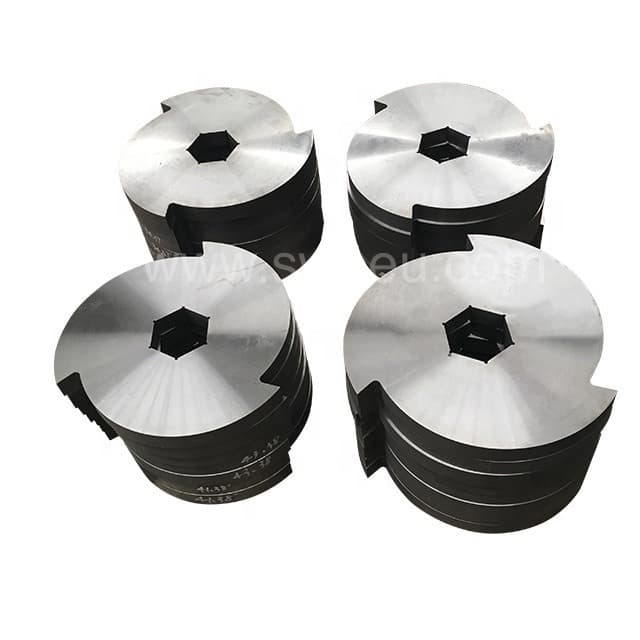
DSK-001
Tire Recycling Double-Shaft Shredder Knife
Tire Recycling Double-Shaft Shredder Knife is built for tire and rubber pre-shredding and bulky waste volume reduction. Available in SKD11 / D2 / Cr12MoV for torque-heavy duty, impact resistance, and manageable maintenance cost. The cutter geometry suits stacked shredder rotors and indexable cutter assemblies.
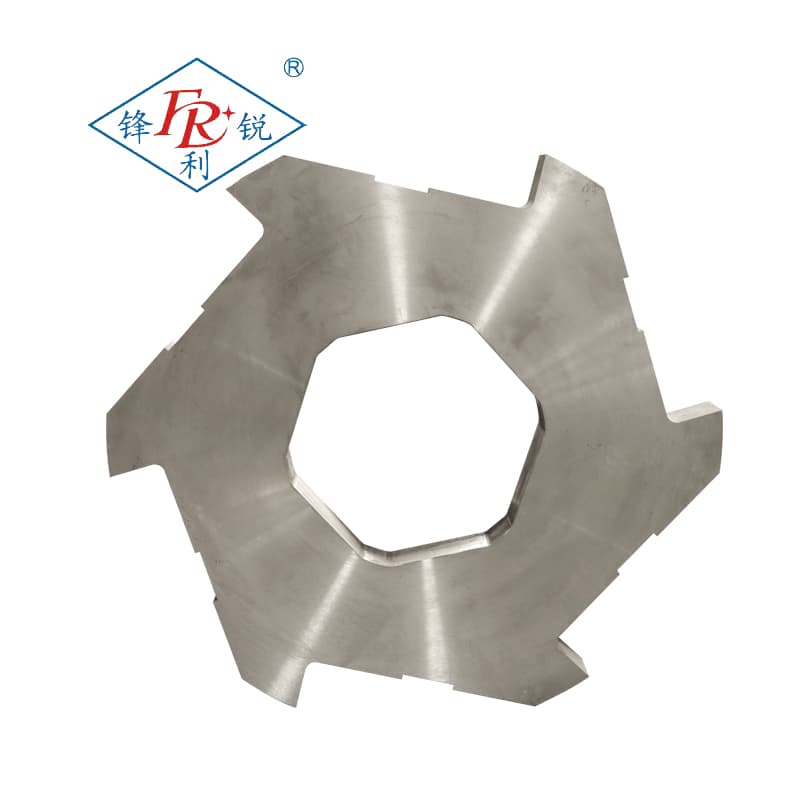
DSK-009
Rubber Double-Shaft Shredder Cutter
Rubber Double-Shaft Shredder Cutter is built for tire and rubber pre-shredding and bulky waste volume reduction. Available in D2 / alloy steel / H13 / SKD11 for torque-heavy duty, impact resistance, and manageable maintenance cost. The cutter geometry suits stacked shredder rotors and indexable cutter assemblies.
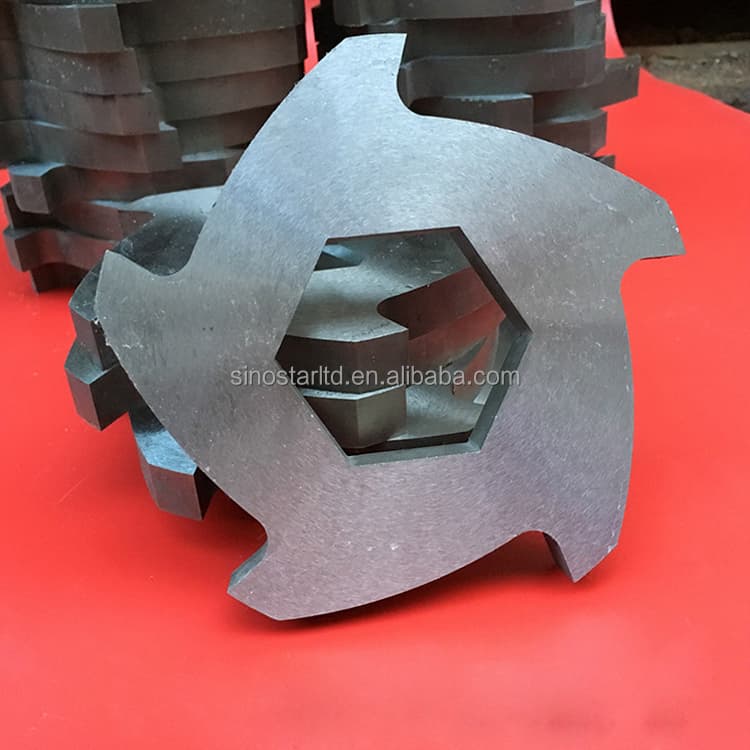
GSK-002
Tire Shredder Knife
Tire Shredder Knife is built for tire and rubber shredding and mixed scrap size reduction. Available in SKD11 / Cr12MoV / 9CrSi for mixed-feed shredding and steady replacement life. The profiled body suits fixed or rotary stations where alignment and edge exposure matter.
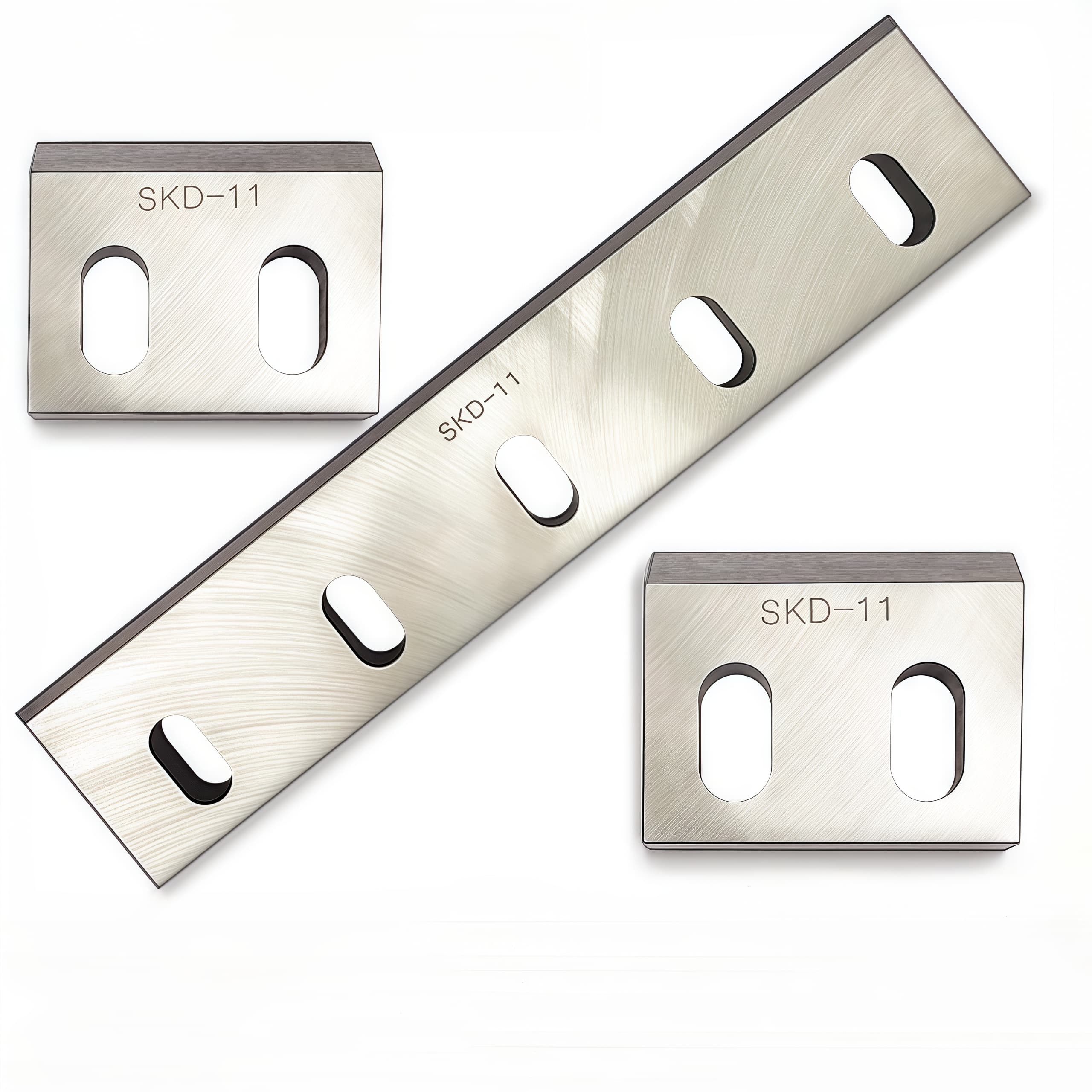
PGK-006
Rubber Granulator Insert Knife
Rubber Granulator Insert Knife is built for rubber scrap granulation and elastomer trim recovery. Available in SKD11 / D2 / HSS / 9CrSi for clean regrind, stable clearance, and practical resharpening cycles. The insert-style format fits compact cutter seats and short replacement positions.
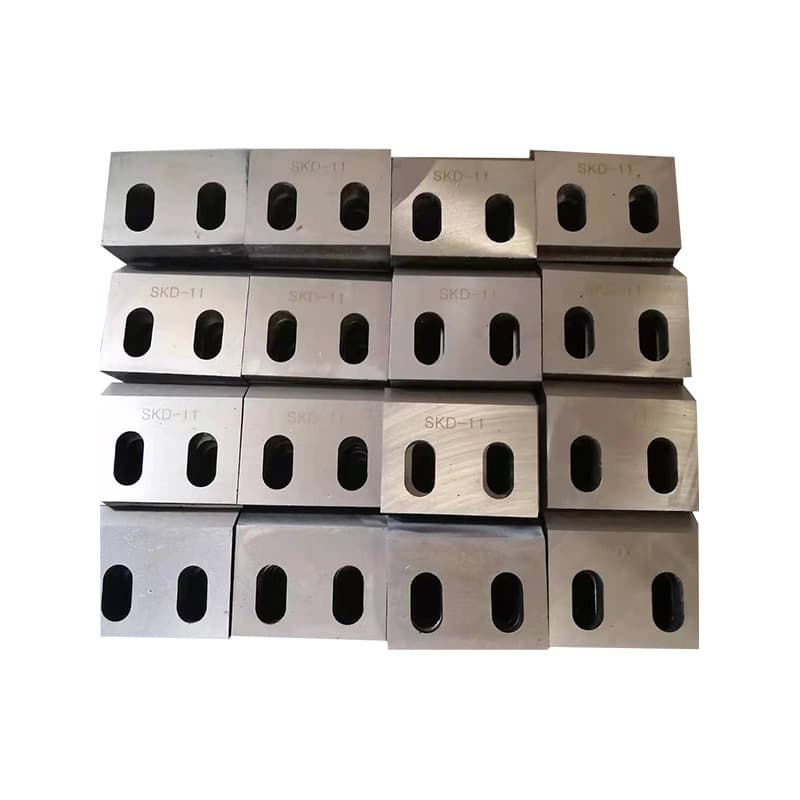
PGK-008
Rubber SKD11 Granulator Knife
Rubber SKD11 Granulator Knife is built for rubber scrap granulation and elastomer trim recovery. Available in SKD11 / D2 / HSS / 9CrSi for clean regrind, stable clearance, and practical resharpening cycles. The profiled body suits fixed or rotary stations where alignment and edge exposure matter.
Related knife categories
Related articles
Tire Shredder Knife RFQ Guide: What Buyers Should Send Before Ordering Replacement Cutters
A source-backed buyer guide for tire shredder knives, rasper-stage cutters, and downstream granulator knives: machine-stage fit, output targets, and the RFQ details that prevent repeat failures.
Read articleBlade Maintenance Tips for Longer Life
Inspection intervals, alignment checks, and cleaning—for granulators, crushers, and shredders.
Read articleFAQ for tire recycling shredder and granulator knives
Should the RFQ identify the exact machine stage?+
Do buyers need to mention target chip size or output market?+
What if the plant only has worn knives and phone photos?+
Why can knife life drop even if the steel grade did not change?+
Which internal pages should buyers compare next?+
Primary sources used for this application guide
These official sources define tire-processing stages, chip sizing, steel liberation, and granulation duty. Use them to align the RFQ with the actual stage and output market.
USTMA
Scrap Tire Handbook on Recycling Applications and Management for the U.S. and Mexico
Official handbook that ties processed-tire value to shred sizing, nominal chip size, and end-use route.
View sourceCM Shredders
Company Overview
Official overview noting patented knife technology and close knife-to-knife tolerances built for tire processing.
View sourceCM Shredders
TDF / Crumb Rubber Feed Stock / Aggregate Systems
Official process page showing how shredding, screening, and chipping are coordinated for tire-derived outputs.
View sourceCM Shredders
CM VFG 1200 Fine Granulator
Official granulator page linking downstream performance to knife design, screen logic, and adjustment access.
View sourceELDAN Recycling
Super Chopper
Official heavy-duty pre-chopper documentation highlighting adjustable knife clearance for optimized cutting.
View sourceELDAN Recycling
Multi Purpose Rasper
Official rasper reference positioning tire and steel-cord reduction as a dedicated heavy-duty stage.
View sourceELDAN Recycling
HDG240 Granulator
Official granulator sheet for later-stage controlled reduction on tough tire-derived material streams.
View sourceNeed replacement knives for a tire-recycling line?
Send the machine stage, output target, current symptom, and old-knife photos. We review whether the safest route is direct replacement, stage review, or a broader line-fit discussion.